Tuesday, April 15, 2014

Căn nhà hội họp này tuyên xưng EDWARD SNOWDEN LÀ MỘT VỊ ANH HÙNG!

“This House Would Call Edward Snowden A Hero”

Chris Hedges

I have been to war. I have seen physical courage. But this kind of courage is not moral courage. Very few of even the bravest warriors have moral courage. For moral courage means to defy the crowd, to stand up as a solitary individual, to shun the intoxicating embrace of comradeship, to be disobedient to authority, even at the risk of your life, for a higher principle. And with moral courage comes persecution.

The American Army pilot Hugh Thompson had moral courage. He landed his helicopter between a platoon of U.S. soldiers and 10 terrified Vietnamese civilians during the My Lai massacre. He ordered his gunner to fire his M60 machine gun on the advancing U.S. soldiers if they began to shoot the villagers. And for this act of moral courage, Thompson, like Snowden, was hounded and reviled. Moral courage always looks like this. It is always defined by the state as treason—the Army attempted to cover up the massacre and court-martial Thompson. It is the courage to act and to speak the truth. Thompson had it. Daniel Ellsberg had it. Martin Luther King had it. What those in authority once said about them they say today about Snowden. 

“My country, right or wrong” is the moral equivalent of “my mother, drunk or sober,” G.K. Chesterton reminded us.

So let me speak to you about those drunk with the power to sweep up all your email correspondence, your tweets, your Web searches, your phone records, your file transfers, your live chats, your financial data, your medical data, your criminal and civil court records and your movements, those who are awash in billions upon billions of taxpayer dollars, those who have banks of sophisticated computer systems, along with biosensors, scanners, face recognition technologies and miniature drones, those who have obliterated your anonymity, your privacy and, yes, your liberty.

There is no free press without the ability of the reporters to protect the confidentiality of those who have the moral courage to make public the abuse of power. Those few individuals inside government who dared to speak out about the system of mass surveillance have been charged as spies or hounded into exile. An omnipresent surveillance state—and I covered the East German Stasi state—creates a climate of paranoia and fear. It makes democratic dissent impossible. Any state that has the ability to inflict full-spectrum dominance on its citizens is not a free state. It does not matter if it does not use this capacity today; it will use it, history has shown, should it feel threatened or seek greater control. The goal of wholesale surveillance, as Hannah Arendt wrote, is not, in the end, to discover crimes, “but to be on hand when the government decides to arrest a certain category of the population.” The relationship between those who are constantly watched and tracked and those who watch and track them is the relationship between masters and slaves.

Those who wield this unchecked power become delusional. Gen. Keith Alexander, the director of the National Security Agency, hired a Hollywood set designer to turn his command center at Fort Meade into a replica of the bridge of the starship Enterprise so he could sit in the captain’s chair and pretend he was Jean-Luc Picard. James Clapper, the director of national intelligence, had the audacity to lie under oath to Congress. This spectacle was a rare glimpse into the absurdist theater that now characterizes American political life. A congressional oversight committee holds public hearings. It is lied to. It knows it is being lied to. The person who lies knows the committee members know he is lying. And the committee, to protect their security clearances, says and does nothing.

These voyeurs listen to everyone and everything. They bugged the conclave that elected the new pope. They bugged the German Chancellor Angela Merkel. They bugged most of the leaders of Europe. They intercepted the talking points of U.N. Secretary-General Ban Ki-moon ahead of a meeting with President Obama. Perhaps the esteemed opposition can enlighten us as to the security threats posed by the conclave of Catholic cardinals, the German chancellor and the U.N. secretary-general. They bugged business like the Brazilian oil company Petrobras and American law firms engaged in trade deals with Indochina for shrimp and clove cigarettes. They carried out a major eavesdropping effort focused on the United Nations Climate Change Conference in Bali in 2007. They bugged their ex-lovers, their wives and their girlfriends. And the NSA stores our data in perpetuity.

I was a plaintiff before the Supreme Court in a case that challenged the warrantless wiretapping, a case dismissed because the court believed the government’s assertion that our concern about surveillance was “speculation.” We had, the court said, no standing ... no right to bring the case. And we had no way to challenge this assertion—which we now know to be a lie—until Snowden.

In the United States the Fourth Amendment limits the state’s ability to search and seize to a specific place, time and event approved by a magistrate. And it is impossible to square the bluntness of the Fourth Amendment with the arbitrary search and seizure of all our personal communications. Former Vice President Al Gore said, correctly, that Snowden disclosed evidence of crimes against the United States Constitution.

We who have been fighting against mass state surveillance for years—including my friend Bill Binney within the NSA—made no headway by appealing to the traditional centers of power. It was only after Snowden methodically leaked documents that disclosed crimes committed by the state that genuine public debate began. Elected officials, for the first time, promised reform. The president, who had previously dismissed our questions about the extent of state surveillance by insisting there was strict congressional and judicial oversight, appointed a panel to review intelligence. Three judges have, since the Snowden revelations, ruled on the mass surveillance, with two saying the NSA spying was unconstitutional and the third backing it. None of this would have happened—none of it—without Snowden.

Snowden had access to the full roster of everyone working at the NSA. He could have made public the entire intelligence community and undercover assets worldwide. He could have exposed the locations of every clandestine station and their missions. He could have shut down the surveillance system, as he has said, “in an afternoon.” But this was never his intention. He wanted only to halt the wholesale surveillance, which until he documented it was being carried out without our consent or knowledge.

No doubt we will hear from the opposition tonight all the ways Snowden should have made his grievances heard, but I can tell you from personal experience, as can Bill, that this argument is as cogent as the offer made by the March Hare during the Mad Tea Party in “Alice in Wonderland.”

“Have some wine,” the March Hare said in an encouraging tone.

Alice looked all round the table, but there was nothing on it but tea.

“I don’t see any wine,” she remarked.

“There isn’t any,” said the March Hare.

Sinh viên rời khỏi giảng đường đại học và gọi Dick Cheney "TÊN TỘI PHẠM CHIẾN TRANH"

Sinh viên phản đối chính sách đối ngoại của tên Dick Cheney khi hắn phát biểu tại trường Đại học Mỹ qua hành động đứng lên rời khỏi giảng đường và gọi to "Tên tội phạm Chiến tranh."


Students protest ‘war criminal’ Cheney at American University

More than two dozen students protested a talk by former Vice President Dick Cheney at American University, and a handful of them called him a “war criminal” as they stormed out.

video from the March 27 event shows students walking out on Cheney, and one can be heard yelling, “Walk out on war criminals.” The speech was hosted by The Kennedy Political Union. The school’s newspaper, The Eagle, reported that Cheney denied that his actions while in office amounted to war crimes.

Cheney was one of the most vocal supporters of the George W. Bush administration policies after September 11, including waterboarding, placing detainees in stress positions, and other practices that are sometimes referred to as “enhanced interrogation” tactics.

“Some people called it torture. It wasn’t torture,” Cheney told ATV, a student-run television station. He argued that because the 1949 Geneva Convention, which prohibits cruel, inhuman, or degrading treatment, does not apply to those deemed unlawful combatants, men deemed terrorists by the U.S.  could be waterboarded legally.

Cheney also said that only three people were waterboarded during his tenure as Vice President, although reports by human rights groups have alleged the practice was much more widespread. 

Cheney went on to say that he would not hesitate to use the same methods. “If I would have to do it all over again, I would,” Cheney said. “The results speak for themselves.”

According to a lengthy Associated Press report on the use of torture as a tool in the Bush administration’s pursuit of terrorists, waterboarding and other harsh techniques did not lead to the collection of any important evidence in the search for Osama bin Laden.


Chính quyền Nhật chính thức BÃI BỎ LỆNH Cấm Xuất Cảng VŨ KHÍ

Japanese Govt. Offically Lifts Ban on Arms Exports

from Asahi Shimbun: Japan effectively lifted its three-decade self-imposed ban on weapons exports with Cabinet approval April 1 of the new “three principles of arms transfer.”

The previous Three Principles on Arms Exports was first enacted in 1967. In 1976, the Cabinet of Prime Minister Takeo Miki banned, in principle, arms exports to all countries.

When the government allowed exceptions to the export ban, the chief Cabinet secretary justified each case individually, issuing public statements explaining the reasons behind the government’s decision.

Under the new principles, Japan is still not allowed to export weapons to countries that violate international treaties by using prohibited arms, such as anti-personnel land mines and cluster munitions. Exports to countries under a United Nations arms embargo, such as North Korea and Iran, and those engaged in military conflicts, will also be banned.

The government will also be required to limit and thoroughly screen all arms exports and disclose information of its decision. It will also be obliged to ensure that exported weapons are not used for purposes other than the original intent or transferred to third countries.


Under the new principles, Japan is likely to export arms to the United States and other close allies, such as the member states of the North Atlantic Treaty Organization.


The new guidelines also aim to facilitate Japan’s joint development and production of weapons with those countries.


The revised guidelines will also enable the transfer of heavy machinery and other items that are used by Self-Defense Forces during peacekeeping operations to foreign countries.


The newly established National Security Council will participate in the screening of cases to determine whether exports should be allowed.


In cases of utmost importance, the industry minister and other Cabinet members will join the final decision-making process along with the prime minister, the chief Cabinet secretary, and the ministers of foreign affairs and defense, who comprise the new council.


When the decision is made to authorize arms exports through a ministerial meeting including non-NSC members, the individual cases will be announced to the public through, for example, a statement by the chief Cabinet secretary.

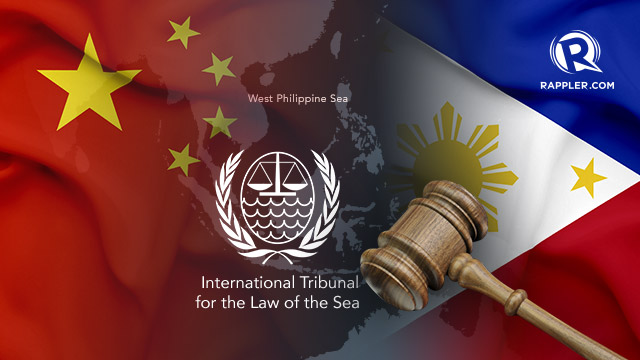
Quan hệ song phương giữa Trung Quốc và Phi Luật Tân tổn thương nặng.

China-Philippines bilateral ties seen as 'seriously injured'

from ANN: The Chinese government on Tuesday said the Philippines’ arbitration bid over its maritime dispute in the West Philippine Sea has “seriously injured”  its bilateral relations with China.


The Chinese Embassy in Manila in a press briefing insisted that the Philippines should engaged on direct negotiations to solve the maritime dispute instead of its arbitration bid before the United Nations (UN) International Tribunal for the law of the Sea (Itlos).

The embassy said the government failed to notify and seek “China’s consent” before initiating arbitration bid.

It said China has every right not to accept arbitration initiated by the Philippines in conformity with international laws.

China said it hoped the Philippines would “correct its mistake” in dealing with maritime dispute.

It added that it had long been exercising sovereignty over west Philippine Sea (South China Sea) and that the Philippines only took interest after oil reserves were found in the 1970s.

Thật sự kiểm tra về chuyến bay 370: Một máy bay Boeing 777 sẽ không biến mất trừ khi chính phủ muốn nó biến mất

Flight 370 reality check: A Boeing 777 doesn't disappear unless governments want it to disappear

by Mike Adams, the Health Ranger
(NaturalNews) As the conventional news coverage of Flight 370 becomes increasingly delusional and detached from reality, for the sake of all those families and loved ones still suffering I thought it important to publish a reality check that can help bring the discussion back to some common sense.

Let's cover five indisputable facts about governments, radar and aircraft:

Fact #1) Every modern nation tracks air traffic with military radar systems

All the key nations involved in Malaysia Airlines Flight 370 run military radar systems 24/7. This includes Malaysia and India, of course. These radar systems are operated for purposes of national defense, making sure each nation can identify aircraft entering its air space.

If you don't believe that military-grade radar systems can track the altitude, direction and speed of a Boeing 777, then you don't believe in radar at all.

Fact #2) Every modern nation runs civilian air traffic control "passive" radar systems that work even without aircraft transponders

Beyond the military radar, modern nations also run air traffic control radar systems which work in both "active" (transponder) modes and "passive" mode (requiring no transponder). Although civilian air traffic control systems are generally not as powerful or accurate as military systems, they are nonetheless fully capable of detecting and tracking a Boeing 777.

In fact, as any air traffic controller will tell you, their radar systems are fully capable of tracking flocks of birds and other airborne objects which are far smaller than a Boeing 777.

Fact #3) A Boeing 777 has a massive radar signature

Unless equipped with some sort of exotic technology we've never heard of -- like a radar "invisibility cloak" borrowed from the Klingons of Star Trek -- a Boeing 777 has a massive radar signature. The cylindrical fuselage, curved wings and surface controls (flaps, ailerons, rudder) all reflect radar waves with very high efficiency. A commercial Boeing aircraft is not a stealth bomber.

The explanation that this Boeing 777 "vanished" from radar simply doesn't hold water. And if the explanation is that "the pilot flew the aircraft at very low elevation to evade radar," then it makes no sense that the pilot would carry out this complex evasion for 4-7 hours and then plunge the aircraft into the Indian Ocean.

Furthermore, a suicidal pilot has no need to evade radar in the first place! If he wanted to crash the plane, he could have done it immediately after takeoff, or at any point during the first few minutes of flight. There is no need to evade radar if you wish to consciously crash the aircraft.

Fact #4) Boeing 777 aircraft cannot survive a collision with the ocean and remain intact

One of the most ridiculous theories currently being floated around the mainstream media -- and written by journalists who apparently have no education in fundamental physics or flight mechanics -- is that Flight 370 "crashed" into the Indian Ocean and somehow magically remained fully intact!

Although it's comforting to think that airplanes are made of incredibly strong steel that can withstand high-velocity impacts with bodies of water, the far more sobering truth is that aircraft are flimsy structures made primarily of aluminum. Aircraft are not rigid; they flex and bend, even during flight. If you've ever watched the wings during flight, you've no doubt noticed that they have a surprisingly wide range of movement, almost as if the wings are flapping. An aircraft fuselage moves, bends, expands and compresses due to changes in temperature, ambient pressure and structural stress.

A large commercial aircraft that crashes into water simply cannot remain intact. While there are some miraculous water landings where skilled pilots were able to "land" aircraft on water thanks to near-stall speeds, flaps and amazing flying skills, a full-speed crash into water can never result in the aircraft remaining fully intact. The nose, wings, fuselage and tail would all be torn apart by impact with a body of water.

Even many attempted "water landings" still result in huge structural failures of the aircraft, as seen in this photo of a relatively gentle water landing of a flight headed for Bali:


An actual crash into water would produce a massive amount of debris, including seats, bodies and other debris easy to spot from satellite imagery or rescue searches.

Fact #5) A vanishing of Flight 370 would have taken the cooperation of governments

Here's the most astonishing fact of all: because of all the facts stated above, the vanishing of Flight 370 must have required intentional planning and action from at least one government (and possibly more). Somebody is covering up the truth of what happened to MH370, and it looks almost certain that the Malaysian government is part of this cover-up, as I previously reported.

The mainstream media is extremely reluctant to ever report on any sort of government cover-up, preferring to pretend that governments are always transparent and honest with the people of the world. Although such an idea is utterly laughable, it remains the default position of the conventional media. That's why the media prefers to run with other theories such as "pilot suicide" or "flight accident," neither of which withstand scrutiny of the facts. (Case in point: If it crashed into the ocean, the black boxes would have been transmitting their location for weeks now, and they would be easy to find.)

World governments routinely lie and deceive the public, of course. As a simple example of that, the U.S. government has now been exposed as spying on all the other governments of the world with an above-top-secret NSA spy program revealed by Edward Snowden. Before his revelations, anyone suggesting the government was "listening to your phone calls" was immediately called a crackpot by the clueless conventional media. Now, of course, we all have come to realize that the NSA really is recording all your phone calls, text messages, social media posts and financial transactions. This is no longer a secret. It's not a conspiracy theory. It's business as usual at the highest levels of government. And yes, it's wildly illegal, but it goes on nonetheless.

That's why the idea that a government "couldn't possibly have lied about Flight 370" is preposterous. Of course a government could lie about Flight 370. It is far harder for any government to tell the truth than to lie, in fact. And the government of Malaysia no more adheres to truth and transparency than the U.S. government, the Russian government or even the government of China. All governments routinely lie to the public almost by default. To expect a government to tell you the truth about anything is to live in fantasy land.

But if you are crazy enough to believe that governments never lie, then I'm happy to report to you that Obamacare now has 6 million enrollees who have all paid their insurance premiums, the national debt of the USA is rapidly shrinking by the hour, nobody in Washington D.C. ever abuses power, the gun-running conspiracy by California Democratic Senator Leland Yee never happened and your tax dollars are always put to a positive purpose for the betterment of society.


Conclusion

Flight 370 most likely did not crash; it was almost certainly taken over (possibly by remote control) and flown to a destination with all passengers alive and the aircraft in one piece.

What happens from there is anyone's guess, but the most likely use of such a stolen aircraft is to turn it into a massive airborne weapons delivery system to be outfitted with biological, chemical or nuclear weapons. Believe me when I say this is the real scenario being discussed behind closed doors at the Pentagon. The "pilot suicide" explanation is merely the sucker's version of events for public consumption.


Bọn gọi là "Tài Chánh Ưu Tú" và Sự tướt đoạt đất đai toàn cầu

43543The Financial Elite and the Global Land Grab

Eric Draitser

The global financial crisis, which began in 2008, has significantly altered the way many speculators and financial institutions invest. Rather than taking huge risks with dodgy derivatives like credit default swaps and mortgage-backed securities, both of which have proven to be particularly volatile, many speculators have instead begun to invest in the most tangible asset of all: land. By doing so, financial institutions, and many governments, have engaged in “land grabbing” – a process by which large amounts of capital are invested in the purchase of land for large-scale agricultural production, while the farmers who have worked the land for generations are displaced and/or become renters on land that was once their own.

This worrying trend is part of a global shift, a consolidation of land and resources in ever fewer hands, while the mass of workers and peasants are made dependent on corporations and governments. Spurred on by the financial crisis and the exponential growth of food and commodity speculation, financiers and their investment institutions (hedge funds, big banks, sovereign wealth funds, etc.) are gobbling up the most fertile land around the world, leading many to wonder what the future of food production and land distribution will look like.
It should be further noted that this trend is not only affecting the poor of the Global South, but also the independent farmers of the so called “developed world.” As such, landgrabbing has become a global phenomenon, one that must be addressed by farmers and working people internationally, with broad-based coalitions and organizations mobilizing resistance and educating the people. Only comprehensive solutions to such a global problem can possibly hope to protect the land, and all of us who depend on it.
Financiers Shall Inherit The Earth?
It has become increasingly clear that speculators, and the financial elite more broadly, have been making a concerted effort in recent years to acquire as much fertile land as possible, intending to use it as a major revenue source against the backdrop of global economic crisis. A recent Oakland Institute study noted:
An estimated 500 million acres…was reported bought or leased across the developing world between 2000 and 2011, often at the expense of local food security and land rights. When the price of food spiked in 2008, pushing the number of hungry people in the world to over one billion, the interests of investors spiked as well, and within a year foreign land deals in the developing world rose by a staggering 200 percent. Today, enthusiasm for agriculture borders on speculative mania. Driven by everything from rising food prices to growing demand for biofuel, the financial sector is taking an interest in farmland as never before.
At the most basic level, such staggering numbers indicate the degree to which financiers have turned to land speculation as merely the latest in a string of “bubbles” – an investment that they feel can turn a massive profit in a short amount of time. Again, it is critical to note the unmistakable connection between their interest in land, and the speculation in food commodities on the global market.
As reported by The Guardian, “In 2012, [Goldman Sachs] made an estimated $400 million from speculating on food. The World bank estimated in 2010 that 44 million people were pushed into poverty because of high food prices, and that speculation is one of the main causes.” Just one major Wall St. bank raked in nearly half a billion dollars in one year just on food commodity speculation, illustrating just how lucrative this market has become. Of course, this is merely betting up the price of staple foods, not even taking into account the astronomical increase in the value of the land itself.
Recent data just on US farmland shows an incredible jump in the value of agricultural land. According to an Iowa State University study, agricultural land in Iowa hit a record high in 2013, having increased more than five percent in one year (2012-2013). The study found that the cost per acre of land had increased 168 percent from 2004-2013. Such startling appreciation in value is enough to drive any speculator with dollar signs in his eyes into the market, hoping for his latest fix of short term profit.
In fact, some of the world’s most influential speculators are diving head first into the land investment game. George Soros, infamous for his predatory investing strategies, has, through a number of subsidiaries and companies, been busy buying up millions of acres of farmland both in the US and around the world. Naturally, savvy speculators like Soros see the potential return on their investment in everything from the development of biofuels to ownership of increasingly precious farmland due to environmental degradation.

The Environmental Justice Organizations, Liabilities, and Trade (EJOLT) recently issued a comprehensive study detailing many aspects of the global land grabbing phenomenon. In the study, the authors noted that:
It often goes unrecognized that the lead actor in today’s global land grab is still the private sector…the reality is that while governments are facilitating the deals, private companies are the ones getting control of the land. And their interests are simply not the same as those of governments…the high-power finance industry, with little to no experience in farming, has emerged as a crucial corporate player…This financial capital is even more volatile, moves even faster and has even less relation to the land than productive capital of other industrial sectors. Today’s emerging new farm owners are private equity fund managers, specialized farmland fund operators, hedge funds, pension funds and big banks.
The report documents a number of high profile cases in Kenya, Brazil, and Madagascar where such corporate land grabbing has had disastrous effects on local populations. As is often the case, corporations and speculating financiers use their wealth in order to buy influence at the level of national governments, cementing their claims to prime real estate. In return, the powerful bureaucrats not only make a hefty profit with which to line their pockets, but also establish powerful friends and contacts with which to further their own careers. Such self-reinforcing corruption lies at the heart of the global land grabbing phenomenon.
In countries like Cambodia, where the rush for land has been in high gear in recent years, such corruption and bureaucracy is most clearly evident. Prime Minister Hun Sen (in office for nearly thirty years) is notorious for selling off some of the best agricultural land in Southeast Asia to major corporations from neighboring Thailand and China, as well as other companies from the developed world. The popular resentment toward Mr. Sen and his dictatorial rule has, in many ways, been galvanized around the issue of land grabbing. The wholesale transfer of land which has been cultivated by families for generations has displaced countless farmers and their families who have little recourse but to protest and try to make their plight known to their countrymen and the outside world.
In an important article documenting the land grabbing phenomenon in Cambodia and the role of the German government in facilitating it, Der Spiegel quoted Lao Mong Hay, a Cambodian civil rights activist who explained, “We are on the road to becoming a society of large land owners…The ruling elite is allied with big business, and together they are making a quick buck…All they need is the land, a few saws and a few tractors…and before long the forest has been cut down…[there is] great injustice…The laws are bad, and they are poorly implemented.” Mr. Hay makes the critical point of the “alliance” between the government and big business. However, to understand the full scope of the problem, one must also recognize the international and multi-faceted corporate web that connects governments in the developed world and their business partners, with the corrupt local governments.
Grabbing More Than Just Land
electro-hydraulic-orange-peel-under-water-grabLand grabbing is directly intertwined with the growing scarcity of fresh water resources around the world. An important study conducted by the Transnational Institute The Global Water Grab: A Primer noted the way in which land and water purchases are intimately related. The authors noted:
An investor’s control of land usually comes with a corresponding control of water resources. Indeed, access to water could be the most valuable part of the deal. This is especially so given that host governments seek to entice investors by offering them concessions with regards to water use…Acquiring land in order to access and control water is especially relevant to countries facing water scarcity…Land and water grabbing are also related in that both involve a model of water use characterised by exploitation, exclusion, and profiteering.
Essentially then, there is a direct relationship between water scarcity, agricultural production, and land grabbing and speculation. Indeed, it is not merely countries dealing with water scarcity who are scouring the earth for prime water real estate. In fact, hedge funds, mutual funds, and other speculative financial institutions have begun including water investments in their major portfolios. This of course goes far beyond simply the purchase of land, as it also is related to the privatization of water resources once publicly held.
Perhaps the most famous example of such privatization of water was the infamous purchase of Bolivia’s water supply by Bechtel and the Abengoa Corporation of Spain in the late 1990s. The deal was facilitated by the World Bank and the neoliberal consensus that controls that institution, and led to a more than doubling of the water rates for Bolivia’s poor. This blatant act of water grabbing, with a complete disregard for the people of Bolivia, led to a major people’s movement, and is considered one of the principal developments that led to the rise of the Left in Bolivia, culminating with the election of President Evo Morales, and Bolivia’s integration into ALBA and the axis of resistance against neoliberal capitalism in South America.
If one needed more evidence that financial and political elites were consolidating their ownership of global water resources, one needs look no further than the Guarani Aquifer in Paraguay. One of the world’s largest fresh water aquifers, Guarani is estimated as being larger than the US states of Texas and California combined. Researchers have calculated that Guarani could provide fresh water for the world’s population for at least 200 years. It is precisely atop this aquifer that George Bush and the Bush family have purchased more than 100,000 acres, though many believe the purchase to in fact be much larger. Naturally, one would ask whether such a purchase was merely an attempt by the infamous Bush family to corner the market on fresh water in the Western hemisphere for the purposes of making an incredible profit. It certainly wouldn’t be the first time that family has done such an odious deal.
The global land and water grab is an ongoing and worrying trend. However, it is not at all irreversible. Coalitions of activists, organizers, and peasants are coming together all over the world to protect land and water rights, and resist the continued attempts by finance capital and the corporate oligarchy to control precious resources. However, it will take the combined efforts of such coalitions, along with ordinary people and national governments, to stem the tide. This is an existential struggle for the working people and peasants who depend on the land and water. However, in the broadest sense, it is an existential struggle for the future of humanity. Unless the resources of the earth can be utilized in an equitable and sustainable way, then civilization itself is under threat.
Eric Draitser is an independent geopolitical analyst based in New York City, he is the founder of StopImperialism.org and OP-ed columnist for RT, exclusively for the online magazine “New Eastern Outlook

Bắc Kinh chơi lá bài Cơ-rưm như thế nào

Trong lúc bọn cẩu chính trị phương Tây sủa ầm ĩ thì đoàn con buôn chính trị Nga-Tầu cứ thong thả tiến bước.


THE ROVING EYE

How Crimea plays in Beijing


By Pepe Escobar


"We are paying very close attention to the situation in Ukraine. We hope all parties can calmly maintain restraint to prevent the situation from further escalating and worsening. Political resolution and dialogue is the only way out."


This, via Chinese Vice Foreign Minister Li Baodong, is Beijing's quite measured, official interpretation of what's happening in Ukraine, tailored for global consumption.


But here, in a People's Daily editorial, is what the leadership is really thinking. And the focus is clearly on the dangers of regime


change, the "West's inability to understand the lessons of history", and "the final battlefield of the Cold War."


Yet again the West misinterpreted China's abstention from the UN Security Council vote on a US-backed resolution condemning the Crimea referendum. The spin was that Russia - which vetoed the resolution - was "isolated". It's not. And the way Beijing plays geopolitics shows it's not.


Oh, Samantha …

The herd of elephants in the (Ukraine) room, in terms of global opinion, is how the authentic "international community" - from the G-20 to the Non-Aligned Movement (NAM) - who has had enough of the Exceptionalist Hypocrisy Show, has fully understood, and even applauded, that at least one country on the planet has the balls to clearly say "F**k the US". Russia under President Vladimir Putin may harbor quite a few distortions, just like any other nation. But this is not a dinner party; this is realpolitik. To face down the US Leviathan, nothing short of a bad ass such as Putin will suffice.


NATO - or shorthand for the Pentagon dominating European wimps - keeps issuing threats and spewing out "consequences". What are they going to do - launch a barrage of ICBMs equipped with nuclear warheads against Moscow?


Furthermore, the UN Security Council itself is a joke, with US ambassador Samantha "Nothing Compares to You" Power - one of the mothers of R2P ("responsibility to protect") - carping on "Russian aggression", "Russian provocations" and comparing the Crimean referendum to a theft. Oh yes; bombing Iraq, bombing Libya and getting to the brink of bombing Syria were just innocent humanitarian gestures. Samantha The Humanitarian arguably gives a better performance invoking Sinead O'Connor in her shower.


Russian ambassador Vitaly Churkin was polite enough to say, "these insults addressed to our country" are "unacceptable". It's what he added that carried the real juice; "If the delegation of the United States of America expects our cooperation in the Security Council on other issues, then Power must understand this quite clearly."


Samantha The Humanitarian, as well as the whole bunch of juvenile bystanders in the Obama administration, won't understand it. Russia's Deputy Foreign Minister Sergei Ryabkov gave them a little help; Russia didn't want to use the Iranian nuclear talks to "raise the stakes", but if the US and the EU continue with their sanctions and threats, that's what's going to happen.


So the plot thickens - as in a closer and closer strategic partnership between Tehran and Moscow.


Secessionists of the world, unite?

Now imagine all this as seen from Beijing. No one knows what exactly goes on in the corridors of the Zhongnanhai, but it's fair to argue there's only an apparent contradiction between China's key principle of non-interference in the internal affairs of sovereign states, and Russia's intervention in Crimea.


Beijing has identified very clearly the sequence of affairs; long-running Western interference in Ukraine via NGOs and the State Department; regime change perpetrated with the help of fascists and neo-nazis; a pre-emptive Russian counterattack which can be read as a by-the-book Samantha The Humanitarian R2P operation (protecting Russians and Russian speakers from a second coup planned in Crimea, and thwarted by Russian intelligence.)


On top of it Beijing well knows how Crimea has been essentially Russian since 1783; how Crimea - as well as a great deal of Ukraine - fall smack into Russian civilization's sphere of influence; and how Western interference directly threatened Russia's national security interests (as Putin made it clear.) Now imagine a similar scenario in Tibet or Xinjiang. Long-running Western interference via NGOs and the CIA; a take over by Tibetans in Lhasa or Uighurs in Kashgar of the local administration. Beijing could easily use Samantha's R2P in the name of protecting Han Chinese.


Yet Beijing (silently) agreeing to the Russian response to the coup in Kiev by getting Crimea back via a referendum and without a shot fired does not mean that "splittists" Tibet or Taiwan would be allowed to engage in the same route. Even as Tibet, more than Taiwan, would be able to build a strong historical case for seceding. Each case bears its own myriad complexities.


The Obama administration - like a blind Minotaur - is now lost in a labyrinth of pivots of its own making. A new Borges - that Buddha in a gray suit - is needed to tell the tale. First there was the pivoting to Asia-Pac - which is encircling of China under another name - as it's well understood in Beijing.


Then came the pivoting to Persia - "if we are not going to war", as that Cypher in Search of an Idea, John Kerry, put it. There was, of course, the martial pivoting to Syria, aborted at the last minute thanks to the good offices of Moscow diplomacy. And back to the pivoting to Russia, trampling the much-lauded "reset" and conceived as a payback for Syria.


Those who believe Beijing strategists have not carefully analyzed - and calculated a response - to all the implications of these overlapping pivots do deserve to join Samantha in the shower. Additionally, it's easy to picture Chinese Think Tankland hardly repressing its glee in analyzing a hyperpower endlessly, helplessly pivoting over itself.


While the Western dogs bark …

Russia and China are strategic partners - at the G-20, at the BRICS club of emerging powers and at the Shanghai Cooperation Organization (SCO). Their number one objective, in these and other forums, is the emergence of a multipolar world; no bullying by the American Empire of Bases, a more balanced international financial system, no more petrodollar eminence, a basket of currencies, essentially a "win-win" approach to global economic development.


A multipolar world also implies, by definition, NATO out of Eurasia - which is from Washington's point of view the number one reason to interfere in Ukraine. In Eurasian terms, it's as if - being booted out of Afghanistan by a bunch of peasants with Kalashnikovs - NATO was pivoting back via Ukraine.


While Russia and China are key strategic partners in the energy sphere - Pipelineistan and beyond - they do overlap in their race to do deals across Central Asia. Beijing is building not only one but two New Silk Roads - across Southeast Asia and across Central Asia, involving pipelines, railways and fiber optic networks, and reaching as far as Istanbul, the getaway to Europe. Yet as far as Russia-China competition for markets go, all across Eurasia, it's more under a "win-win" umbrella than a zero-sum game.


On Ukraine ("the last battlefield in the Cold War") and specifically Crimea, the (unspoken) official position by Beijing is absolute neutrality (re: the UN vote). Yet the real deal is support to Moscow. But this could never be out in the open, because Beijing is not interested in antagonizing the West, unless heavily provoked (the pivoting becoming hardcore encirclement, for instance). Never forget; since Deng Xiaoping ("keep a low profile") this is, and will continue to be, about China's "peaceful rise". Meanwhile, the Western dogs bark, and the Sino-Russian caravan passes.


Pepe Escobar is the author of Globalistan: How the Globalized World is Dissolving into Liquid War (Nimble Books, 2007), Red Zone Blues: a snapshot of Baghdad during the surge (Nimble Books, 2007), and Obama does Globalistan (Nimble Books, 2009).