Friday, July 15, 2022

Video: Nông dân Hà Lan đứng lên chống lại việc 'thiết lập lại' hệ thống lương thực

Hà Lan dự định giảm một nửa ô nhiễm nitơ và amoniac vào năm 2030. Để đạt được mục tiêu đó, Bộ Tài chính và Nông nghiệp hiện muốn giảm số lượng vật nuôi xuống 30%. Kết quả là, nhiều nông dân sẽ bị đuổi ra khỏi doanh nghiệp. Cũng như tình trạng thiếu hụt năng lượng hiện nay, việc cắt giảm sản lượng canh tác được cho là một phần “không thể tránh khỏi” của Chương trình Nghị sự Xanh nhằm cải thiện chất lượng không khí, đất và nước.

Quyết định xóa sổ chăn nuôi gia súc với danh nghĩa bảo vệ môi trường là vô hiệu trước tình trạng thiếu lương thực và nạn đói tiềm ẩn trên toàn thế giới. Có vẻ như họ đang cố tình làm cho thịt trở nên khan hiếm và đắt đỏ đến mức những người bình thường không thể mua được. Sau đó, họ có thể giới thiệu các lựa chọn thay thế thịt tổng hợp và protein côn trùng, cả hai đều nằm trong kế hoạch thực phẩm của The Great Reset.

Mặc dù khái niệm về một thế giới không ô nhiễm là một điều hấp dẫn, nhưng cuối cùng, Chương trình Nghị sự Xanh không phải là về môi trường - mà là về việc tạo ra một hệ thống kiểm soát trong đó các nguồn tài nguyên trên thế giới thuộc sở hữu của những người giàu nhất, trong khi phần còn lại của dân số được kiểm soát thông qua việc phân bổ các nguồn lực đó và bao gồm cả việc phân bổ lương thực.

Mọi thứ giờ đây chỉ ra rằng tình trạng thiếu lương thực và nạn đói đang trở thành hiện thực ở nhiều nơi trên thế giới, bao gồm cả Mỹ và châu Âu.


-Bò góp phần gây ô nhiễm nitơ và amoniac như thế nào?

-Thời gian tò mò

-Điều gì sai với nitơ?

-Các quy tắc về khí hậu của Hà Lan sẽ cắt giảm sự sẵn có của thịt trên toàn EU

-Sự tái lập lương thực toàn cầu do Quỹ Rockefeller báo trước

-Tóm tắt về trang chủ của 'Đặt lại bảng'

-Từ thịt bò đến dế

-Các nhà khoa học đặt câu hỏi về tính an toàn của thịt được nuôi trong phòng thí nghiệm

-Chuẩn bị cho tình trạng thiếu lương thực


Video: Dutch Farmers Rise Up Against Food System ‘Reset’

By Dr. Joseph Mercola 

The Netherlands intends to halve its nitrogen and ammonia pollution by 2030. To reach that goal, the Finance and Agriculture Ministry now wants to reduce the number of livestock by 30%. As a result, many farmers will be driven out of business. As with current energy shortages, the resulting reductions in farming are said to be an “unavoidable” part of the Green Agenda to improve air, soil and water quality

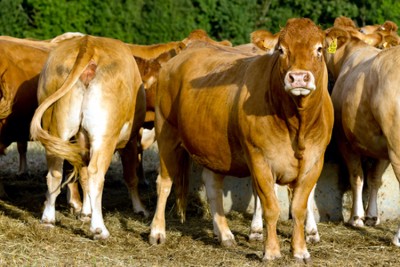
Cattle are fed nitrogen in the form of crude protein. While protein is an essential nutrient for cows, nitrogen is not efficiently broken down by cattle, so a lot of it is excreted in the urine and feces as urea. When urine and feces get mixed together, the urea is converted into ammonia

Since the amount of ammonia produced is related to the crude protein the animals are fed, one suggested way to lower the ammonia is to reduce the amount of crude protein in the animals’ diet. A potential problem with that idea is that cattle have protein requirements just like humans do. If they don’t cut crude protein, they’ll have to downsize their herds, and if smaller herds aren’t financially feasible, they’ll have to shut down altogether

The decision to decimate cattle farming in the name of environmental protection rings hollow in the face of looming food shortages and potential famine worldwide. It appears they’re intentionally trying to make meat so scarce and expensive that regular people can’t afford it. They can then introduce synthetic meat alternatives and insect protein, both of which are part of The Great Reset’s food plan

While the notion of a pollution-free world is an attractive one, ultimately, the Green Agenda isn’t about the environment — it’s about creating a control system in which the world’s resources are owned by the richest of the rich, while the rest of the population is controlled through the allocation of those resources, and that includes the allocation of food.

The Netherlands is currently in an uproar over the government’s decision to reduce the number of livestock by 30% in an effort to halve its nitrogen and ammonia pollution by 2030.1 As a result of this “green” policy, many farmers will be driven out of business.2 As with current energy shortages, the resulting reductions in farming are said to be an “unavoidable” part of the Green Agenda to improve air, soil and water quality.3

The Dutch government has even appointed a new Minister of Nature and Nitrogen to oversee the climate goals.4 Provincial authorities now have one year to work out how they’re going to meet the emission reduction targets.

In a public statement about the new emissions targets, the Dutch government admitted that “The honest message … is that not all farmers can continue their business.”5 Those who do continue will have to come up with creative solutions to meet the new emissions restrictions.

How Do Cows Contribute to Nitrogen and Ammonia Pollution?

Cattle are fed nitrogen in the form of crude protein. While protein is an essential nutrient for cows, nitrogen is not efficiently broken down by cattle, so a lot of it is excreted in the urine and feces as urea. When urine and feces get mixed together, the urea is converted into ammonia.6,7

Since the amount of ammonia produced is related to the crude protein the animals are fed, one suggested way to lower the ammonia is to reduce the amount of crude protein in the animals’ diet. (Other factors such as season also impact ammonia production, but farmers have no control over that.)

A potential problem with that idea is that cattle have protein requirements just like humans do. It’s particularly crucial for healthy development, muscle growth and lactation. As noted in a 2009 paper8 by Jane Parish, a beef cattle specialist in Mississippi, “Providing adequate protein in beef cattle diets is important for animal health and productivity as well as ranch profitability.”

Responsible farmers give their cattle just the right amount, so cutting crude protein could impact both the animals’ health and farm productivity. If they don’t cut crude protein, they’ll have to downsize their herds, and if smaller herds aren’t financially feasible, they’ll have to shut down altogether. Needless to say, many are outraged, as skyrocketing fertilizer and feed costs have already cut profits for farmers and raised prices for consumers.

Curious Timing

As noted in a July 1, 2022, report by Peter Imanuelsen, an independent journalist in Sweden, the timing of this brazen attack on cattle farmers is a curious one, and one that can only really be explained as an intentional strategy to force us into The Great Reset by manufacturing a food crisis:9

“We will likely see even more expensive food next year, and unfortunately probably famines in some parts of the world. So, what do the genius politicians in Europe do? They want to shut down farms because of climate change of course! That will surely help! The cows are farting too much!

That’s not a joke by the way. In New Zealand, they want to implement a tax on cow farts and burps! I really don’t get this. We are facing a food crisis and they want to shut down farms in the name of climate change? I guess they really want you to eat the bugs and be happy. They are working on making meat so expensive that the common people won’t be able to afford it. Are you enjoying The Great Reset?”

In response to the new nitrogen and ammonia restrictions, an estimated 40,000 Dutch farmers have gathered in protest, arguing the attack on farming is irrational and unfair, as other industries responsible for far greater amounts of pollution — such as transport, construction and aviation — aren’t facing the same restrictions.

They’ve blocked a number of highways with tractors and even sprayed manure on the town hall in Lochem.10 Local police have reportedly responded by shooting at some of the farmers. Jimmy Dore reviews the situation in the video above.

What’s Wrong With Nitrogen?

As explained by Plant Based News,11 nitrogen makes up about 78% of the earth’s atmosphere and is essential for life. However, in excess, and in the wrong areas, it can damage the ecosystem. Nitrogen runoff from concentrated animal feeding operations (CAFOs) and farms using synthetic pesticides and fertilizers can leach into and contaminate water supplies.

Nitrogen runoff can also cause algae blooms when it enters lakes or oceans. This depletes the water of oxygen and creates dead zones where no aquatic life can be sustained. This is why I’ve long advocated against CAFOs and conventional industrial farms that rely on chemicals to grow food.

That doesn’t mean livestock are a blight on the eco system, however. Quite the contrary. Livestock raised in accordance with regenerative agriculture principles will heal and massively improve soil quality and help stabilize the climate. So, it’s not cows per se that are the problem. It’s the industrialization of cattle ranching that causes it to have a negative impact. The answer, then, is not to eliminate meat production. The answer is to transition into a regenerative system.

Since the transition can take a few years, during which profits may be marginal or absent, many farmers hesitate to take this step on their own. Government could facilitate the transition by subsidizing farmers that make the switch, but none have opted to do so. Why? Could it be because regenerative farming is the converse of what The Great Reset is all about?

Dutch Climate Rules Will Cut Meat Availability Across EU

In 2019, the highest administrative court in The Netherlands, the Council of State, ruled the Dutch government was in breach of European Union law that called for stark cuts in nitrogen emissions.12

Following that ruling, some 18,000 infrastructure projects were abandoned in an attempt to meet the EU restrictions. The Dutch government also lowered the maximum daytime speed limit on highways to 100 kilometers an hour (61 mph). All of that still wasn’t enough though, so now the Finance and Agriculture Ministry wants to reduce the number of livestock by 30%.

The Netherlands has a significant number of farmers. In any given year, they raise some 4 million beef cattle alone. But reducing the number of cattle by 30% will not only have ramifications for the Dutch, but all of the EU, because The Netherlands is the largest meat exporter in the EU.13

In September 2021, Rudi Buis, a spokesperson for the Dutch agriculture ministry, told The Guardian:14

“We are a relatively small country with a lot of inhabitants, industry, transport and agriculture, so we are reaching the limits of what nature can take. There is a high level of urgency for us to tackle the nitrogen compounds problem. This means that in the near future, choices must be made.”

Apparently, the option they’ve chosen is starvation and nutritional deficiencies for all. The saddest part of it is that eliminating meat production is not going to have the fabulous impact they say it will have. It’s a fraudulent greenwashing enterprise that will destroy humanity instead.

While the notion of a pollution-free world is an attractive one, ultimately, the Green Agenda isn’t about the environment — it’s about creating a control system in which the world’s resources are owned by the richest of the rich, while the rest of the population is controlled through the allocation of those resources, and that includes the allocation of food.

The Global Food Reset Foretold by the Rockefeller Foundation

While looming food shortages are now blamed on climate change and the Russia-Ukraine conflict, the Rockefeller Foundation discussed coming food shortages as an inevitability back in July 2020, and called for a revamping of the food system to address it. Seeing how true prophets are few and far in between these days, it seems more reasonable to suspect that paper was delineating a known, intentional plan.

The document in question, titled “Reset the Table: Meeting the Moment to Transform the U.S. Food System,”15 was published July 28, 2020. It describes how the COVID pandemic had caused “a hunger and nutrition crisis” in the U.S. “unlike any this country has seen in generations.”

Mind you, COVID was declared a pandemic March 11, 2020, so by the time this Rockefeller report was published, the pandemic had only existed for four months, and while certain high-risk groups did experience food insecurity, such as children whose primary meal is a school lunch, widespread food shortages, in terms of empty shelves, were not widely prevalent or particularly severe in the U.S.

The title itself is also revealing, as it’s a clear play on The Great Reset, which was officially announced by the World Economic Forum (WEF) and the Prince of Wales in early June 2020.16 The title alone tells us that the Rockefeller Foundation’s call for a food system reset is part and parcel of the WEF’s Great Reset. Many of the contributors to the Foundation’s paper are WEF members, which further strengthens this connection.

In the foreword,17 Rockefeller Foundation president Dr. Rajiv Shah also stresses that “a comprehensive playbook” to address the food system will also need to address other issues, “such as living wages, housing and transportation,” and that “all of us” — meaning the self-proclaimed designers of the future — “need to write that playbook together over the coming year.” What better way to predict the future than to actually create it?

All of those things — wages, housing and transportation — are all facets that will undergo dramatic revision under The Great Reset’s Fourth Industrial Revolution, as artificial intelligence, robotics, surveillance, social engineering and transhumanism (the merger of man with machine) take over.

Summary Take-Home of ‘Reset the Table’

In summary, “Reset the Table” describes how they intend to seize control of the food supply and the supply chain under the guise of “equity,” “fairness” and “environmental protection.” As noted by ThreadsIrish on Substack:18

“The document is very much framed in the Hegelian dialectic of problem, reaction, solution. Here is the problem that they have created (COVID) and now they want to implement the solution (Transforming the global food supply). Naturally this is all ties into lands being destroyed, climate change and trying to move people back into smart cities (Page 5). Surprise, surprise.”

One key to this enterprise is data collection. They want to collect data on everyone’s spending and eating habits, and to facilitate that data collection, they want to shift everything into an online environment, including education, medicine and the buying of food.

Another key to success is “changes to policies, practices and norms.” The goal is to centralize control of the food supply into a single executive office, which is right in line with the idea of a “one world government.” As WEF member Henry Kissinger once said, “Who controls the food supply controls the people; who controls the energy can control whole continents; who controls money can control the world.”

From Beef to Crickets

Getting back to the issue of Dutch beef production being strangled, the reason global leaders seem so unconcerned with dwindling meat production is probably because they don’t want us to eat meat. They intend for us to eat lab grown synthetic meat that can be patented, and insects,19 which can easily and inexpensively be produced in mass quantities using very little land.

As noted in a July 2021 WEF article titled, “Why We Need to Give Insects the Role They Deserve in Our Food Systems,”20 insects are “a credible and efficient alternative protein source requiring fewer resources than conventional breeding,” and “a healthy ingredient” that is highly digestible and particularly suitable for senior nutrition.

Insect farming also requires few natural resources, such as water, and could reduce agricultural pollution by nearly 99%. The article points out that the last barrier to making insect burgers the norm is “preconceived ideas about insects as a source of food and legislation with regard to the use and consumption of proteins derived from insects.”

There are indications that “Reset the Table” is promoting a diet of insects as well, because while it stresses the need for a “healthy diet” and “sustainable agriculture,” the words “organic” and “grass fed” do not appear a single time, and the word “natural” is only used in reference to “natural disasters.”

In other words, their versions of “healthy diet” and “sustainable agriculture” do not include what we know are basic criteria for a healthy, nutritious, sustainable and regenerative food supply. The Foundation’s call for changes to “policies, practices and norms” also indicates that the diet they’re talking about involves something that is outside the norm.

Both lab-grown meat and insects are outside the norm of what most people are willing to put in their mouth, and thus policies about what constitutes “food” need to be changed, as do food production practices and social norms about what’s acceptable to eat and what’s not.

Scientists Question Safety of Lab-Grown Meat

While venture capitalists see lab-grown meat alternatives as the cash cow of the future, many scientists are leery. In mid-June 2022, the Center for Food Safety (CFS) held a webinar in which a panel of experts addressed a number of questions surrounding lab-grown meats, including safety and regulatory issues.21

One of the panelists was Michael Hansen, Ph.D., a senior staff scientist with Consumer Reports. He raised concerns about cell-cultured meats, where biopsied cells from an animal are grown in fetal bovine blood (extracted from a live, aborted baby calf).

His main concern revolves around the use of manipulated DNA segments, as that could have unforeseen consequences, but he pointed out that we also have no data on the nutritional composition of this kind of meat. As reported by The Defender:22

“According to Hansen, the piece of flesh biopsied from the animal is an undifferentiated stem cell. The products use bio-engineered proteins in a nutrient solution to induce the cells to differentiate into muscle for meat. This is done in bio-reactor vats similar to those used to make beer.

While scientific papers have covered topics related to cell-cultured meat, Hansen said, none has actually analyzed the nutritional characteristics of the finished product, and academics have not received samples. This implies ‘problems behind the scenes,’ Hansen said, adding, ‘I doubt this technology will work.'”

Tom Neltner, chemicals policy director at the Environmental Defense Fund (EDF), was also part of the panel. Neltner noted that while sustainable protein sources are needed, lab-grown meats will be proprietary, meaning the full ingredients list and how they’re made is a trade secret, so “We won’t know their effect or what they are.” The Defender added:23

“The concept of proprietary foodstuffs … led the panelists to address the regulation of cell-cultured meat and the role of the U.S. Food and Drug Administration (FDA), which one panelist called a ‘captured’ agency.

Neltner said he worried cell-cultured meat could be ushered into the food supply under the FDA’s Generally Recognized As Safe program. Under the program, a company simply tells the FDA its product is safe, based on the company’s own documentation, and bypasses the public comment process.’

Neltner, whose primary focus at the EDF is food additive safety, said he preferred companies be required to submit to the FDA a ‘food additive petition,’ which includes a ‘right to challenge.’

Panelists also raised concerns about the effects novel ingredients may have on aspects of the human microbiome. Hansen pointed out that 10 years ago, we could not culture and study microbiome components. But now we can, and it’s important that we know these effects.

For example, Hansen said, it is now known that the genome and genes themselves can be affected by epigenetic changes without even touching the DNA …

Hansen said biopsied cells of an animal used in cell-cultured meat do not contain the immunity actions from the animal’s immune system, which could leave bio-reactor vats susceptible to bacteria like salmonella, fungi and worse unless antibiotics are used. Cell-cultured meat producers claim they may not have to add antibiotics, although even alcohol distillers have to add them to their vats, Hansen said.”

Prepare for Food Shortages

Everything now points to food shortages and famine becoming a reality in many parts of the world, including the U.S. and Europe.24 As yet, stores are still fairly well stocked with essentials, but that will change come winter and into 2023. This means you may only have another six months or so to stock up.

This past Monday, I published an article with suggestions for how to prepare. That article, “Get Prepared With Shelf-Stable Foods,” will be made available for free on Substack, so if you missed it, you can review it now.


Notes

1, 4, 9, 10 Substack, The Freedom Corner with PeterSweden July 1, 2022

2 Bloomberg June 28, 2022

3, 5 Indian Express July 3, 2022

6 Science Daily June 29, 2016

7 Penn State Nitrogen from the Farm

8 Cattle Business in Mississippi April 2009, Protein Requirements of Beef Cattle

11, 12, 13 Plant Based News September 27, 2021

14 The Guardian September 9, 2021

15 Rockefeller Foundation Reset the Table

16 Weforum June 3, 2020

17 Rockefeller Foundation Reset the Table (PDF) Foreword

18 ThreadsIrish June 18, 2022

19, 20 WEF July 12, 2021

21, 22, 23 The Defender June 27, 2022

24 Substack Maajid Nawaz April 25, 2022

Chris Hedges: NATO - Liên minh quân sự nguy hiểm nhất hành tinh

-Tổ chức Hiệp ước Bắc Đại Tây Dương (NATO), và ngành công nghiệp vũ khí phụ thuộc vào nó để thu lợi hàng tỷ USD, đã trở thành liên minh quân sự hung hãn và nguy hiểm nhất hành tinh. Được tạo ra vào năm 1949 để ngăn chặn sự bành trướng của Liên Xô sang Đông và Trung Âu, nó đã phát triển thành một cỗ máy chiến tranh toàn cầu ở Châu Âu, Trung Đông, Châu Mỹ Latinh, Châu Phi và Châu Á.

-Chưa có lúc nào, kể cả cuộc khủng hoảng tên lửa Cuba, chúng ta lại tiến gần hơn tới bờ vực của chiến tranh hạt nhân.

-Cuộc chiến ở Ukraine càng kéo dài - và Mỹ và NATO dường như quyết tâm bỏ hàng tỷ đô la vũ khí vào cuộc xung đột trong nhiều tháng, nếu không muốn nói là nhiều năm - thì điều không tưởng càng trở nên khó nghĩ. Tán tỉnh Armageddon để thu lợi nhuận từ ngành công nghiệp vũ khí và thực hiện nhiệm vụ vô ích để giành lại quyền bá chủ toàn cầu của Hoa Kỳ, tốt nhất là cực kỳ liều lĩnh và tồi tệ nhất là tội ác diệt chủng.


Chris Hedges: NATO — The Most Dangerous Military Alliance on the Planet

By Chris Hedges 

The North Atlantic Treaty Organization (NATO), and the arms industry that depends on it for billions in profits, has become the most aggressive and dangerous military alliance on the planet. Created in 1949 to thwart Soviet expansion into Eastern and Central Europe, it has evolved into a global war machine in Europe, the Middle East, Latin America, Africa and Asia.

NATO expanded its footprint, violating promises to Moscow, once the Cold War ended, to incorporate 14 countries in Eastern and Central Europe into the alliance. It will soon add Finland and Sweden. It bombed Bosnia, Serbia and Kosovo. It launched wars in Afghanistan, Iraq, Syria and Libya, resulting in close to a million deaths and some 38 million people driven from their homes. It is building a military footprint in Africa and Asia. It invited Australia, Japan, New Zealand and South Korea, the so-called “Asia Pacific Four,” to its recent summit in Madrid at the end of June. It has expanded its reach into the Southern Hemisphere, signing a military training partnership agreement with Colombia, in December 2021. It has backed Turkey, with NATO’s second largest military, which has illegally invaded and occupied parts of Syria as well as Iraq. Turkish-backed militias are engaged in the ethnic cleansing of Syrian Kurds and other inhabitants of north and east Syria. The Turkish military has been accused of war crimes – including multiple airstrikes against a refugee camp andchemical weapons use – in northern Iraq. In exchange for President Recep Tayyip Erdoğan’s permission for Finland and Sweden to join the alliance, the two Nordic countries have agreed to expand their domestic terror laws making it easier to crack down on Kurdish and other activists, lift their restrictions on selling arms to Turkey and deny support to the Kurdish-led movement for democratic autonomy in Syria.

It is quite a record for a military alliance that with the collapse of the Soviet Union was rendered obsolete and should have been dismantled. NATO and the militarists had no intention of embracing the “peace dividend,” fostering a world based on diplomacy, a respect of spheres of influence and mutual cooperation. It was determined to stay in business. Its business is war. That meant expanding its war machine far beyond the border of Europe and engaging in ceaseless antagonism toward China and Russia.

NATO sees the future, as detailed in its “NATO 2030: Unified for a New Era,” as a battle for hegemony with rival states, especially China, and calls for the preparation of prolonged global conflict.

“China has an increasingly global strategic agenda, supported by its economic and military heft,” the NATO 2030 initiative warned. “It has proven its willingness to use force against its neighbors, as well as economic coercion and intimidatory diplomacy well beyond the Indo-Pacific region. Over the coming decade, China will likely also challenge NATO’s ability to build collective resilience, safeguard critical infrastructure, address new and emerging technologies such as 5G and protect sensitive sectors of the economy including supply chains. Longer term, China is increasingly likely to project military power globally, including potentially in the Euro-Atlantic area.”

The alliance has spurned the Cold War strategy that made sure Washington was closer to Moscow and Beijing than Moscow and Beijing were to each other. U.S. and NATO antagonism have turned Russia and China into close allies. Russia, rich in natural resources, including energy, minerals and grains, and China, a manufacturing and technological behemoth, are a potent combination. NATO no longer distinguishes between the two, announcing in its most recent mission statement that the “deepening strategic partnership” between Russian and China has resulted in “mutually reinforcing attempts to undercut the rules-based international order that run counter to our values and interests.”

On July 6, Christopher Wray, director of the FBI, and Ken McCallum, director general of Britain’s MI5, held a joint news conference in London to announce that China was the “biggest long-term threat to our economic and national security.” They accused China, like Russia, of interfering in U.S. and U.K. elections. Wray warned the business leaders they addressed that the Chinese government was “set on stealing your technology, whatever it is that makes your industry tick, and using it to undercut your business and dominate your market.”

This inflammatory rhetoric presages an ominous future.

One cannot talk about war without talking about markets. The political and social turmoil in the U.S., coupled with its diminishing economic power, has led it to embrace NATO and its war machine as the antidote to its decline.

Washington and its European allies are terrified of China’s trillion-dollar Belt and Road Initiative (BRI) meant to connect an economic bloc of roughly 70 nations outside U.S. control. The initiative includes the construction of rail lines, roads and gas pipelines that will be integrated with Russia. Beijing is expected to commit $1.3 trillion to the BRI by 2027. China, which is on track to become the world’s largest economy within a decade, has organized the Regional Comprehensive Economic Partnership, the world’s largest trade pact of 15 East Asian and Pacific nations representing 30 percent of global trade. It already accounts for 28.7 percent of the Global Manufacturing Output, nearly double the 16.8 percent of the U.S.

China’s rate of growth last year was an impressive  8.1 percent, although slowing to around 5 percent this year.  By contrast, the U.S.’s growth rate in 2021 was 5.7 percent — its highest since 1984 — but is predicted to fall below 1 percent this year, by the New York Federal Reserve.

If China, Russia, Iran, India and other nations free themselves from the tyranny of the U.S. dollar as the world’s reserve currency and the international Society for Worldwide Interbank Financial Telecommunication (SWIFT), a messaging network financial institutions use to send and receive information such as money transfer instructions, it will trigger a dramatic decline in the value of the dollar and a financial collapse in the U.S. The huge military expenditures, which have driven the U.S. debt to $30 trillion, $ 6 trillion more than the U.S.’s entire GDP, will become untenable. Servicing this debt costs $300 billion a year. We spent more on the military in 2021, $ 801 billion which amounted to 38 percent of total world expenditure on the military, than the next nine countries, including China and Russia, combined. The loss of the dollar as the world’s reserve currency will force the U.S. to slash spending, shutter many of its 800 military bases overseas and cope with the inevitable social and political upheavals triggered by economic collapse. It is darkly ironic that NATO has accelerated this possibility.

Russia, in the eyes of NATO and U.S. strategists, is the appetizer. Its military, NATO hopes, will get bogged down and degraded in Ukraine. Sanctions and diplomatic isolation, the plan goes, will thrust Vladimir Putin from power. A client regime that will do U.S. bidding will be installed in Moscow.

NATO has provided more than $8 billion in military aid to Ukraine, while the US has committed nearly $54 billion in military and humanitarian assistance to the country.

China, however, is the main course. Unable to compete economically, the U.S. and NATO have turned to the blunt instrument of war to cripple their global competitor.

The provocation of China replicates the NATO baiting of Russia.

NATO expansion and the 2014 US-backed coup in Kyiv led Russia to first occupy Crimea, in eastern Ukraine, with its large ethnic Russian population, and then to invade all of Ukraine to thwart the country’s efforts to join NATO.

The same dance of death is being played with China over Taiwan, which China considers part of Chinese territory, and with NATO expansion in the Asia Pacific. China flies warplanes into Taiwan’s air defense zone and the U.S. sends naval ships through the Taiwan Strait which connects the South and East China seas. Secretary of State Antony Blinken in May called China the most serious long-term challenge to the international order, citing its claims to Taiwan and efforts to dominate the South China Sea. Taiwan’s president, in a Zelensky-like publicity stunt, recently posed with an anti-tank rocket launcher in a government handout photo.

The conflict in Ukraine has been a bonanza for the arms industry, which, given the humiliating withdrawal from Afghanistan, needed a new conflict. Lockheed Martin’s stock prices are up 12 percent. Northrop Grumman is up 20 percent. The war is being used by NATO to increase its military presence in Eastern and Central Europe. The U.S. is building a permanent military base in Poland. The 40,000-strong NATO reaction force is being expanded to 300,000 troops. Billions of dollars in weapons are pouring into the region.

The conflict with Russia, however, is already backfiring. The ruble has soared to a seven-year high against the dollar. Europe is barreling towards a recession because of rising oil and gas prices and the fear that Russia could terminate supplies completely. The loss of Russian wheat, fertilizer, gas and oil, due to Western sanctions, is creating havoc in world markets and a humanitarian crisis in Africa and the Middle East. Soaring food and energy prices, along with shortages and crippling inflation, bring with them not only deprivation and hunger, but social upheaval and political instability. The climate emergency, the real existential threat, is being ignored to appease the gods of war.

The war makers are frighteningly cavalier about the threat of nuclear war. Putin warned NATO countries that they “will face consequences greater than any you have faced in history” if they intervened directly in Ukraine and ordered Russian nuclear forces to be put on heightened alert status. The proximity to Russia of U.S. nuclear weapons based in Belgium, Germany, Italy, Netherlands and Turkey mean that any nuclear conflict would obliterate much of Europe. Russia and the United States control about 90 percent of the world’s nuclear warheads, with around 4,000 warheads each in their military stockpiles, according to the Federation of American Scientists.

President Joe Biden warned that the use of nuclear weapons in Ukraine would be “completely unacceptable” and “entail severe consequences,” without spelling out what those consequences would be. This is what U.S. strategists refer to as “deliberate ambiguity.”

The U.S. military, following its fiascos in the Middle East, has shifted its focus from fighting terrorism and asymmetrical warfare to confronting China and Russia. President Barack Obama’s national-security team in 2016 carried out a war game in which Russia invaded a NATO country in the Baltics and used a low-yield tactical nuclear weapon against NATO forces. Obama officials were split about how to respond.

“The National Security Council’s so-called Principals Committee—including Cabinet officers and members of the Joint Chiefs of Staff—decided that the United States had no choice but to retaliate with nuclear weapons,” Eric Schlosser writes in The Atlantic. “Any other type of response, the committee argued, would show a lack of resolve, damage American credibility, and weaken the NATO alliance. Choosing a suitable nuclear target proved difficult, however. Hitting Russia’s invading force would kill innocent civilians in a NATO country. Striking targets inside Russia might escalate the conflict to an all-out nuclear war. In the end, the NSC Principals Committee recommended a nuclear attack on Belarus—a nation that had played no role whatsoever in the invasion of the NATO ally but had the misfortune of being a Russian ally.”

The Biden administration has formed a Tiger Team of national security officials to run war games on what to do if Russia uses a nuclear weapon, according to The New York Times. The threat of nuclear war is minimized with discussions of “tactical nuclear weapons,” as if less powerful nuclear explosions are somehow more acceptable and won’t lead to the use of bigger bombs.

At no time, including the Cuban missile crisis, have we stood closer to the precipice of nuclear war.

“A simulation devised by experts at Princeton University starts with Moscow firing a nuclear warning shot; NATO responds with a small strike, and the ensuing war yields more than 90 million casualties in its first few hours,” The New York Times reported.

The longer the war in Ukraine continues — and the U.S. and NATO seem determined to funnel billions of dollars of weapons into the conflict for months if not years — the more the unthinkable becomes thinkable. Flirting with Armageddon to profit the arms industry and carry out the futile quest to reclaim U.S. global hegemony is at best extremely reckless and at worst genocidal.

*

Note to readers: Please click the share buttons above or below. Follow us on Instagram and Twitter and subscribe to our Telegram Channel. Feel free to repost and share widely Global Research articles.

Chris Hedges is a Pulitzer Prize–winning journalist who was a foreign correspondent for fifteen years for The New York Times, where he served as the Middle East Bureau Chief and Balkan Bureau Chief for the paper. He previously worked overseas for The Dallas Morning News, The Christian Science Monitor, and NPR. He is the host of show The Chris Hedges Report.


Tuesday, July 5, 2022

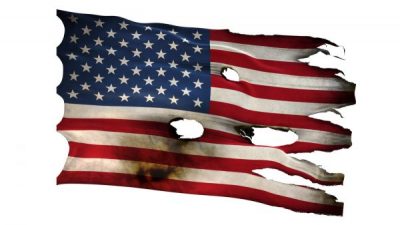
Lá cờ có ý nghĩa gì đối với tôi. Brian Willson

Tôi tin rằng chúng ta đang sống một trong những lời nói dối đáng kinh ngạc nhất trong lịch sử, bị che đậy bởi một trong những chiến dịch hùng biện công khai thành công nhất, bỏ qua thực tế thường nghiệm. Nó thực sự đáng kinh ngạc! Tôi hy vọng rằng một ngày nào đó chúng ta sẽ chấm dứt sự ngu dốt cố ý của mình và có thể nhìn thấy những vi phạm của mình, quỳ gối cầu xin sự tha thứ, và sau đó than khóc khi chúng ta bắt đầu cảm thấy nỗi đau và nỗi thống khổ đáng kinh ngạc mà chúng ta đã gây ra cho thế giới cũng như cơ thể, tâm trí, linh hồn và văn hóa của chính chúng ta.


What The Flag Means To Me. Brian Willson


Global Research, July 04, 2022


I was probably seven years old before it really sunk in that everybody in my town was not celebrating my birthday on July 4. It was an exciting day with parades, picnics, fireworks and, in my case, special birthday parties and gifts. I lived much of my young life with the extra boost of having been born on the day that our earliest political framers signed the Declaration of Independence, an historical act of defiance against monarchial colonial rule from distant England.

I remember proudly carrying the U.S. American flag in one of the July 4th parades in my small, agricultural town in upstate New York. And for years I felt goosebumps looking at Old Glory waving in the breeze during the playing of the national anthem or as it passed by in a parade. How lucky I was to have been born in the greatest country in the history of the world, and blessed by God to boot. Such a blessing, such a deal!

It wasn’t until many years later, while reading an issue of the armed forces newspaper Stars and Stripes in Vietnam, that I began thinking and feeling differently about the flag and what it represents. There was a story about an arrest for flag burning somewhere in the United States.

I had recently experienced the horror of seeing numerous bodies of young women and children that were burned alive in a small Delta village devastated by napalm. I imagined that since the pilots had “successfully” hit their targets, they were feeling good and probably had received glowing reports that would bode well in their military record for promotions. I wondered why it was okay to burn innocent human beings 10,000 miles from my home town, but not okay to burn a piece of cloth that was symbolic of the country that had horribly napalmed those villagers. Something was terribly wrong with the Cold War rhetoric of fighting communism that made me question what our nation stood for. There was a grand lie, an American myth, that was being fraudulently preserved under the cloak of our flag.

It took me years to process this clear cognitive dissonance between the rhetoric of my cultural teachings and the reality of my own personal experiences. I had to accept that, either there was serious distortion in how I was interpreting my personal realities, or the cultural rhetoric was terribly distorted. Hmm. A dilemma! If I accepted the former, I could relax and feel good about being an “American.” If I accepted the latter, I would experience a serious identity crisis, perhaps a nervous breakdown. But no matter how hard I tried, I could not ignore what my own conscience was continually telling me.

I began a serious reflection that included careful study of U.S. and world history. When I was a teenager living near Seneca Indian reservations in western New York State I occasionally heard Seneca acquaintances utter “jokes” about how the “White man speaks with forked tongue.” We thought it funny at the time. But then I discovered how my country really was founded. There were hundreds of nations comprised of millions of human beings–yes, human beings–living throughout the land before our European ancestors arrived here in the 1600s. The U.S. government signed over 400 treaties with various Indigenous nations and violated every one of them. And over time these original peoples were systematically eliminated in what amounted to the first genuine American holocaust.

When I reread the Declaration of Independence I noted words I hadn’t been aware of before: “He [the King of Great Britain] has excited domestic insurrections amongst us, and has endeavoured to bring on the inhabitants of our frontiers, the merciless Indian savages, whose known rule of warfare, is an undistinguished destruction of all ages, sexes and conditions.” Honest history reveals that the very land upon which our founding fathers began this new experiment in freedom had been taken by violence and deceit, ironically using the same diabolical methods the framers accused of those already living here.

It became obvious after extensive reading that my European ancestors did not believe that Indigenous Americans were human beings worthy of respect, but despicable, non-human creatures, worthy only of extermination. The pre-Columbus population of Indigenous in the Western Hemisphere is estimated to have been at least 100 million (8-12 million north of the Rio Grande). By 1900 this population had been reduced to about 5 percent of its former size. An Indigenous friend of mine, a Seneca man who had served the U.S. military in World War II, Korea, and Vietnam, and then after retiring, discovered his ancestral roots as a native American, once remarked to me: “I call the American flag ‘Old Gory,’ the red representing the blood, and the white, the bones, of my murdered ancestors.”

>When adding to our first holocaust the damage done to African cultures through forcefully seizing human beings to be slaves in order to build our early agricultural and industrial base, and the carnage from nearly 300 U.S. overt military and thousands of covert interventions in the Twentieth Century to acquire access to markets and resources on our selfish terms, we see there are actually three holocausts that have enabled the “glorious American civilization” to be what it is today. It is now estimated that Africa lost 50 million of its population to the slave trade, at least two-thirds of whom were killed resisting capture or died during the horrors of transit; an estimated 20 to 30 million people in the Third World have been killed as a result of U.S. interventions. Note that when other peoples all over the globe have attempted to emulate the spirit of our Declaration of Independence (a proclamation of self-determination), such as Vietnam explicitly did in 1945, our government not only has turned a deaf ear, but has done everything in its power short of dropping Atomic bombs to destroy their efforts to obtain independence. This is the foundation upon which we have built “America.” Quite the karma!

The founding of our Republic was conducted in secrecy by an upper class who insisted on a strong national government that could assure a successful but forceful clearing of western lands, enabling the safe settlement and economic development of previously inhabited Indigenous territory. Our Founding Fathers did not represent the common people. Some historians believe that if the Constitution itself had been subjected to a genuine vote of all the people it would have been resoundly defeated. Subsequently, what evolved is a political system run by plutocrats who perpetuate an economic system that protects the interests of those who finance their campaigns (a form of bribery). The U.S. government is a democracy in name only. Never have we had a government that seriously addresses the plight of the people, whether it be workers, minorities, women, the poor, etc. Whatever has been achieved in terms of rights and benefits for these constituencies, i.e., the people, has been struggled for against substantial repression, and the constant threat the gains will be subsequently lost. Intense pressures are applied by the selfish oligarchy which seeks ever increased profits, rarely, if ever, considering the expense to the health of the majority of people, their local cultures, and the ecology.

What the West calls capitalism is nothing like what Adam Smith had in mind with his views of decentralized networks of small entrepreneurs working in harmony with the needs and forces of others in their own communities. What we have is a savage system of centrally institutionalized greed that is unable to generalize an equitable way of life for the majority of people here in the U.S., or in the rest of the world. It requires incredible exploitation of human and other natural resources all over the globe with the forcible protection of military and paramilitary forces financed or sanctioned by governments. It thrives on its own sinister version of welfare where the public financially guarantees–through tax loopholes, subsidies, contracts, and outright bailouts–the profitable success of the major corporations and financial institutions, especially, but not exclusively, in the military-industrial complex. Additionally, our monopoly capitalism defines efficiency by totally ignoring the true costs of its production and distribution.

It conveniently forgets the huge ecological and human exhaustion costs (both being our true wealth). If these costs were included, the system would be finished in a second. The reality, upon honest examination, is that the economic system we call capitalism, now neoliberal, global capitalism, is cruelly based on a very fraudulent set of assumptions that justify massive exploitation. The reality, upon honest examination, is that our political system was founded, and has been maintained to this very day by substantive plutocracy, not democracy. So when I see the flag and think of the Declaration of Independence, instead of the United States of America, I see the United Corporations of America; I see the blood and bones of people all over the globe who have been dehumanized, then exterminated by its imperialism; and I see a symbol that represents a monstrous lie maintained by excessive, deadly force. It makes me feel sick, and ashamed. And I know that my opinions being expressed here will not be popular, even among some of my closest friends. But I cannot ignore the reality as I now understand it.

I believe we are living one of the most incredible lies in history, covered over by one of the most successful campaigns of public rhetoric, ignoring empirical reality. It is truly amazing! I hope that one day we will end our willful ignorance and be able to see our transgressions, and beg, on our knees, for forgiveness, and then wail as we begin to feel the incredible pain and anguish we have caused the world as well as our own bodies, minds, souls, and culture.

S. Brian Willson, Vietnam war veteran, renowned peace activist, human rights lawyer and award winning author, Granada, Nicaragua, Research Associate of the Centre for Research on Globalization (CRG)