Friday, July 15, 2022

Chris Hedges: NATO - Liên minh quân sự nguy hiểm nhất hành tinh

-Tổ chức Hiệp ước Bắc Đại Tây Dương (NATO), và ngành công nghiệp vũ khí phụ thuộc vào nó để thu lợi hàng tỷ USD, đã trở thành liên minh quân sự hung hãn và nguy hiểm nhất hành tinh. Được tạo ra vào năm 1949 để ngăn chặn sự bành trướng của Liên Xô sang Đông và Trung Âu, nó đã phát triển thành một cỗ máy chiến tranh toàn cầu ở Châu Âu, Trung Đông, Châu Mỹ Latinh, Châu Phi và Châu Á.

-Chưa có lúc nào, kể cả cuộc khủng hoảng tên lửa Cuba, chúng ta lại tiến gần hơn tới bờ vực của chiến tranh hạt nhân.

-Cuộc chiến ở Ukraine càng kéo dài - và Mỹ và NATO dường như quyết tâm bỏ hàng tỷ đô la vũ khí vào cuộc xung đột trong nhiều tháng, nếu không muốn nói là nhiều năm - thì điều không tưởng càng trở nên khó nghĩ. Tán tỉnh Armageddon để thu lợi nhuận từ ngành công nghiệp vũ khí và thực hiện nhiệm vụ vô ích để giành lại quyền bá chủ toàn cầu của Hoa Kỳ, tốt nhất là cực kỳ liều lĩnh và tồi tệ nhất là tội ác diệt chủng.
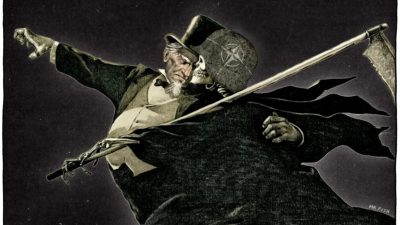
 

Chris Hedges: NATO — The Most Dangerous Military Alliance on the Planet

By Chris Hedges 

The North Atlantic Treaty Organization (NATO), and the arms industry that depends on it for billions in profits, has become the most aggressive and dangerous military alliance on the planet. Created in 1949 to thwart Soviet expansion into Eastern and Central Europe, it has evolved into a global war machine in Europe, the Middle East, Latin America, Africa and Asia.

NATO expanded its footprint, violating promises to Moscow, once the Cold War ended, to incorporate 14 countries in Eastern and Central Europe into the alliance. It will soon add Finland and Sweden. It bombed Bosnia, Serbia and Kosovo. It launched wars in Afghanistan, Iraq, Syria and Libya, resulting in close to a million deaths and some 38 million people driven from their homes. It is building a military footprint in Africa and Asia. It invited Australia, Japan, New Zealand and South Korea, the so-called “Asia Pacific Four,” to its recent summit in Madrid at the end of June. It has expanded its reach into the Southern Hemisphere, signing a military training partnership agreement with Colombia, in December 2021. It has backed Turkey, with NATO’s second largest military, which has illegally invaded and occupied parts of Syria as well as Iraq. Turkish-backed militias are engaged in the ethnic cleansing of Syrian Kurds and other inhabitants of north and east Syria. The Turkish military has been accused of war crimes – including multiple airstrikes against a refugee camp andchemical weapons use – in northern Iraq. In exchange for President Recep Tayyip Erdoğan’s permission for Finland and Sweden to join the alliance, the two Nordic countries have agreed to expand their domestic terror laws making it easier to crack down on Kurdish and other activists, lift their restrictions on selling arms to Turkey and deny support to the Kurdish-led movement for democratic autonomy in Syria.

It is quite a record for a military alliance that with the collapse of the Soviet Union was rendered obsolete and should have been dismantled. NATO and the militarists had no intention of embracing the “peace dividend,” fostering a world based on diplomacy, a respect of spheres of influence and mutual cooperation. It was determined to stay in business. Its business is war. That meant expanding its war machine far beyond the border of Europe and engaging in ceaseless antagonism toward China and Russia.

NATO sees the future, as detailed in its “NATO 2030: Unified for a New Era,” as a battle for hegemony with rival states, especially China, and calls for the preparation of prolonged global conflict.

“China has an increasingly global strategic agenda, supported by its economic and military heft,” the NATO 2030 initiative warned. “It has proven its willingness to use force against its neighbors, as well as economic coercion and intimidatory diplomacy well beyond the Indo-Pacific region. Over the coming decade, China will likely also challenge NATO’s ability to build collective resilience, safeguard critical infrastructure, address new and emerging technologies such as 5G and protect sensitive sectors of the economy including supply chains. Longer term, China is increasingly likely to project military power globally, including potentially in the Euro-Atlantic area.”

The alliance has spurned the Cold War strategy that made sure Washington was closer to Moscow and Beijing than Moscow and Beijing were to each other. U.S. and NATO antagonism have turned Russia and China into close allies. Russia, rich in natural resources, including energy, minerals and grains, and China, a manufacturing and technological behemoth, are a potent combination. NATO no longer distinguishes between the two, announcing in its most recent mission statement that the “deepening strategic partnership” between Russian and China has resulted in “mutually reinforcing attempts to undercut the rules-based international order that run counter to our values and interests.”

On July 6, Christopher Wray, director of the FBI, and Ken McCallum, director general of Britain’s MI5, held a joint news conference in London to announce that China was the “biggest long-term threat to our economic and national security.” They accused China, like Russia, of interfering in U.S. and U.K. elections. Wray warned the business leaders they addressed that the Chinese government was “set on stealing your technology, whatever it is that makes your industry tick, and using it to undercut your business and dominate your market.”

This inflammatory rhetoric presages an ominous future.

One cannot talk about war without talking about markets. The political and social turmoil in the U.S., coupled with its diminishing economic power, has led it to embrace NATO and its war machine as the antidote to its decline.

Washington and its European allies are terrified of China’s trillion-dollar Belt and Road Initiative (BRI) meant to connect an economic bloc of roughly 70 nations outside U.S. control. The initiative includes the construction of rail lines, roads and gas pipelines that will be integrated with Russia. Beijing is expected to commit $1.3 trillion to the BRI by 2027. China, which is on track to become the world’s largest economy within a decade, has organized the Regional Comprehensive Economic Partnership, the world’s largest trade pact of 15 East Asian and Pacific nations representing 30 percent of global trade. It already accounts for 28.7 percent of the Global Manufacturing Output, nearly double the 16.8 percent of the U.S.

China’s rate of growth last year was an impressive  8.1 percent, although slowing to around 5 percent this year.  By contrast, the U.S.’s growth rate in 2021 was 5.7 percent — its highest since 1984 — but is predicted to fall below 1 percent this year, by the New York Federal Reserve.

If China, Russia, Iran, India and other nations free themselves from the tyranny of the U.S. dollar as the world’s reserve currency and the international Society for Worldwide Interbank Financial Telecommunication (SWIFT), a messaging network financial institutions use to send and receive information such as money transfer instructions, it will trigger a dramatic decline in the value of the dollar and a financial collapse in the U.S. The huge military expenditures, which have driven the U.S. debt to $30 trillion, $ 6 trillion more than the U.S.’s entire GDP, will become untenable. Servicing this debt costs $300 billion a year. We spent more on the military in 2021, $ 801 billion which amounted to 38 percent of total world expenditure on the military, than the next nine countries, including China and Russia, combined. The loss of the dollar as the world’s reserve currency will force the U.S. to slash spending, shutter many of its 800 military bases overseas and cope with the inevitable social and political upheavals triggered by economic collapse. It is darkly ironic that NATO has accelerated this possibility.

Russia, in the eyes of NATO and U.S. strategists, is the appetizer. Its military, NATO hopes, will get bogged down and degraded in Ukraine. Sanctions and diplomatic isolation, the plan goes, will thrust Vladimir Putin from power. A client regime that will do U.S. bidding will be installed in Moscow.

NATO has provided more than $8 billion in military aid to Ukraine, while the US has committed nearly $54 billion in military and humanitarian assistance to the country.

China, however, is the main course. Unable to compete economically, the U.S. and NATO have turned to the blunt instrument of war to cripple their global competitor.

The provocation of China replicates the NATO baiting of Russia.

NATO expansion and the 2014 US-backed coup in Kyiv led Russia to first occupy Crimea, in eastern Ukraine, with its large ethnic Russian population, and then to invade all of Ukraine to thwart the country’s efforts to join NATO.

The same dance of death is being played with China over Taiwan, which China considers part of Chinese territory, and with NATO expansion in the Asia Pacific. China flies warplanes into Taiwan’s air defense zone and the U.S. sends naval ships through the Taiwan Strait which connects the South and East China seas. Secretary of State Antony Blinken in May called China the most serious long-term challenge to the international order, citing its claims to Taiwan and efforts to dominate the South China Sea. Taiwan’s president, in a Zelensky-like publicity stunt, recently posed with an anti-tank rocket launcher in a government handout photo.

The conflict in Ukraine has been a bonanza for the arms industry, which, given the humiliating withdrawal from Afghanistan, needed a new conflict. Lockheed Martin’s stock prices are up 12 percent. Northrop Grumman is up 20 percent. The war is being used by NATO to increase its military presence in Eastern and Central Europe. The U.S. is building a permanent military base in Poland. The 40,000-strong NATO reaction force is being expanded to 300,000 troops. Billions of dollars in weapons are pouring into the region.

The conflict with Russia, however, is already backfiring. The ruble has soared to a seven-year high against the dollar. Europe is barreling towards a recession because of rising oil and gas prices and the fear that Russia could terminate supplies completely. The loss of Russian wheat, fertilizer, gas and oil, due to Western sanctions, is creating havoc in world markets and a humanitarian crisis in Africa and the Middle East. Soaring food and energy prices, along with shortages and crippling inflation, bring with them not only deprivation and hunger, but social upheaval and political instability. The climate emergency, the real existential threat, is being ignored to appease the gods of war.

The war makers are frighteningly cavalier about the threat of nuclear war. Putin warned NATO countries that they “will face consequences greater than any you have faced in history” if they intervened directly in Ukraine and ordered Russian nuclear forces to be put on heightened alert status. The proximity to Russia of U.S. nuclear weapons based in Belgium, Germany, Italy, Netherlands and Turkey mean that any nuclear conflict would obliterate much of Europe. Russia and the United States control about 90 percent of the world’s nuclear warheads, with around 4,000 warheads each in their military stockpiles, according to the Federation of American Scientists.

President Joe Biden warned that the use of nuclear weapons in Ukraine would be “completely unacceptable” and “entail severe consequences,” without spelling out what those consequences would be. This is what U.S. strategists refer to as “deliberate ambiguity.”

The U.S. military, following its fiascos in the Middle East, has shifted its focus from fighting terrorism and asymmetrical warfare to confronting China and Russia. President Barack Obama’s national-security team in 2016 carried out a war game in which Russia invaded a NATO country in the Baltics and used a low-yield tactical nuclear weapon against NATO forces. Obama officials were split about how to respond.

“The National Security Council’s so-called Principals Committee—including Cabinet officers and members of the Joint Chiefs of Staff—decided that the United States had no choice but to retaliate with nuclear weapons,” Eric Schlosser writes in The Atlantic. “Any other type of response, the committee argued, would show a lack of resolve, damage American credibility, and weaken the NATO alliance. Choosing a suitable nuclear target proved difficult, however. Hitting Russia’s invading force would kill innocent civilians in a NATO country. Striking targets inside Russia might escalate the conflict to an all-out nuclear war. In the end, the NSC Principals Committee recommended a nuclear attack on Belarus—a nation that had played no role whatsoever in the invasion of the NATO ally but had the misfortune of being a Russian ally.”

The Biden administration has formed a Tiger Team of national security officials to run war games on what to do if Russia uses a nuclear weapon, according to The New York Times. The threat of nuclear war is minimized with discussions of “tactical nuclear weapons,” as if less powerful nuclear explosions are somehow more acceptable and won’t lead to the use of bigger bombs.

At no time, including the Cuban missile crisis, have we stood closer to the precipice of nuclear war.

“A simulation devised by experts at Princeton University starts with Moscow firing a nuclear warning shot; NATO responds with a small strike, and the ensuing war yields more than 90 million casualties in its first few hours,” The New York Times reported.

The longer the war in Ukraine continues — and the U.S. and NATO seem determined to funnel billions of dollars of weapons into the conflict for months if not years — the more the unthinkable becomes thinkable. Flirting with Armageddon to profit the arms industry and carry out the futile quest to reclaim U.S. global hegemony is at best extremely reckless and at worst genocidal.

*

Note to readers: Please click the share buttons above or below. Follow us on Instagram and Twitter and subscribe to our Telegram Channel. Feel free to repost and share widely Global Research articles.

Chris Hedges is a Pulitzer Prize–winning journalist who was a foreign correspondent for fifteen years for The New York Times, where he served as the Middle East Bureau Chief and Balkan Bureau Chief for the paper. He previously worked overseas for The Dallas Morning News, The Christian Science Monitor, and NPR. He is the host of show The Chris Hedges Report.


Tuesday, July 5, 2022

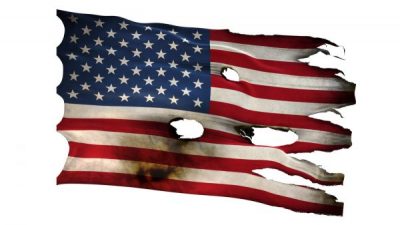
Lá cờ có ý nghĩa gì đối với tôi. Brian Willson

Tôi tin rằng chúng ta đang sống một trong những lời nói dối đáng kinh ngạc nhất trong lịch sử, bị che đậy bởi một trong những chiến dịch hùng biện công khai thành công nhất, bỏ qua thực tế thường nghiệm. Nó thực sự đáng kinh ngạc! Tôi hy vọng rằng một ngày nào đó chúng ta sẽ chấm dứt sự ngu dốt cố ý của mình và có thể nhìn thấy những vi phạm của mình, quỳ gối cầu xin sự tha thứ, và sau đó than khóc khi chúng ta bắt đầu cảm thấy nỗi đau và nỗi thống khổ đáng kinh ngạc mà chúng ta đã gây ra cho thế giới cũng như cơ thể, tâm trí, linh hồn và văn hóa của chính chúng ta.


What The Flag Means To Me. Brian Willson


Global Research, July 04, 2022


I was probably seven years old before it really sunk in that everybody in my town was not celebrating my birthday on July 4. It was an exciting day with parades, picnics, fireworks and, in my case, special birthday parties and gifts. I lived much of my young life with the extra boost of having been born on the day that our earliest political framers signed the Declaration of Independence, an historical act of defiance against monarchial colonial rule from distant England.

I remember proudly carrying the U.S. American flag in one of the July 4th parades in my small, agricultural town in upstate New York. And for years I felt goosebumps looking at Old Glory waving in the breeze during the playing of the national anthem or as it passed by in a parade. How lucky I was to have been born in the greatest country in the history of the world, and blessed by God to boot. Such a blessing, such a deal!

It wasn’t until many years later, while reading an issue of the armed forces newspaper Stars and Stripes in Vietnam, that I began thinking and feeling differently about the flag and what it represents. There was a story about an arrest for flag burning somewhere in the United States.

I had recently experienced the horror of seeing numerous bodies of young women and children that were burned alive in a small Delta village devastated by napalm. I imagined that since the pilots had “successfully” hit their targets, they were feeling good and probably had received glowing reports that would bode well in their military record for promotions. I wondered why it was okay to burn innocent human beings 10,000 miles from my home town, but not okay to burn a piece of cloth that was symbolic of the country that had horribly napalmed those villagers. Something was terribly wrong with the Cold War rhetoric of fighting communism that made me question what our nation stood for. There was a grand lie, an American myth, that was being fraudulently preserved under the cloak of our flag.

It took me years to process this clear cognitive dissonance between the rhetoric of my cultural teachings and the reality of my own personal experiences. I had to accept that, either there was serious distortion in how I was interpreting my personal realities, or the cultural rhetoric was terribly distorted. Hmm. A dilemma! If I accepted the former, I could relax and feel good about being an “American.” If I accepted the latter, I would experience a serious identity crisis, perhaps a nervous breakdown. But no matter how hard I tried, I could not ignore what my own conscience was continually telling me.

I began a serious reflection that included careful study of U.S. and world history. When I was a teenager living near Seneca Indian reservations in western New York State I occasionally heard Seneca acquaintances utter “jokes” about how the “White man speaks with forked tongue.” We thought it funny at the time. But then I discovered how my country really was founded. There were hundreds of nations comprised of millions of human beings–yes, human beings–living throughout the land before our European ancestors arrived here in the 1600s. The U.S. government signed over 400 treaties with various Indigenous nations and violated every one of them. And over time these original peoples were systematically eliminated in what amounted to the first genuine American holocaust.

When I reread the Declaration of Independence I noted words I hadn’t been aware of before: “He [the King of Great Britain] has excited domestic insurrections amongst us, and has endeavoured to bring on the inhabitants of our frontiers, the merciless Indian savages, whose known rule of warfare, is an undistinguished destruction of all ages, sexes and conditions.” Honest history reveals that the very land upon which our founding fathers began this new experiment in freedom had been taken by violence and deceit, ironically using the same diabolical methods the framers accused of those already living here.

It became obvious after extensive reading that my European ancestors did not believe that Indigenous Americans were human beings worthy of respect, but despicable, non-human creatures, worthy only of extermination. The pre-Columbus population of Indigenous in the Western Hemisphere is estimated to have been at least 100 million (8-12 million north of the Rio Grande). By 1900 this population had been reduced to about 5 percent of its former size. An Indigenous friend of mine, a Seneca man who had served the U.S. military in World War II, Korea, and Vietnam, and then after retiring, discovered his ancestral roots as a native American, once remarked to me: “I call the American flag ‘Old Gory,’ the red representing the blood, and the white, the bones, of my murdered ancestors.”

>When adding to our first holocaust the damage done to African cultures through forcefully seizing human beings to be slaves in order to build our early agricultural and industrial base, and the carnage from nearly 300 U.S. overt military and thousands of covert interventions in the Twentieth Century to acquire access to markets and resources on our selfish terms, we see there are actually three holocausts that have enabled the “glorious American civilization” to be what it is today. It is now estimated that Africa lost 50 million of its population to the slave trade, at least two-thirds of whom were killed resisting capture or died during the horrors of transit; an estimated 20 to 30 million people in the Third World have been killed as a result of U.S. interventions. Note that when other peoples all over the globe have attempted to emulate the spirit of our Declaration of Independence (a proclamation of self-determination), such as Vietnam explicitly did in 1945, our government not only has turned a deaf ear, but has done everything in its power short of dropping Atomic bombs to destroy their efforts to obtain independence. This is the foundation upon which we have built “America.” Quite the karma!

The founding of our Republic was conducted in secrecy by an upper class who insisted on a strong national government that could assure a successful but forceful clearing of western lands, enabling the safe settlement and economic development of previously inhabited Indigenous territory. Our Founding Fathers did not represent the common people. Some historians believe that if the Constitution itself had been subjected to a genuine vote of all the people it would have been resoundly defeated. Subsequently, what evolved is a political system run by plutocrats who perpetuate an economic system that protects the interests of those who finance their campaigns (a form of bribery). The U.S. government is a democracy in name only. Never have we had a government that seriously addresses the plight of the people, whether it be workers, minorities, women, the poor, etc. Whatever has been achieved in terms of rights and benefits for these constituencies, i.e., the people, has been struggled for against substantial repression, and the constant threat the gains will be subsequently lost. Intense pressures are applied by the selfish oligarchy which seeks ever increased profits, rarely, if ever, considering the expense to the health of the majority of people, their local cultures, and the ecology.

What the West calls capitalism is nothing like what Adam Smith had in mind with his views of decentralized networks of small entrepreneurs working in harmony with the needs and forces of others in their own communities. What we have is a savage system of centrally institutionalized greed that is unable to generalize an equitable way of life for the majority of people here in the U.S., or in the rest of the world. It requires incredible exploitation of human and other natural resources all over the globe with the forcible protection of military and paramilitary forces financed or sanctioned by governments. It thrives on its own sinister version of welfare where the public financially guarantees–through tax loopholes, subsidies, contracts, and outright bailouts–the profitable success of the major corporations and financial institutions, especially, but not exclusively, in the military-industrial complex. Additionally, our monopoly capitalism defines efficiency by totally ignoring the true costs of its production and distribution.

It conveniently forgets the huge ecological and human exhaustion costs (both being our true wealth). If these costs were included, the system would be finished in a second. The reality, upon honest examination, is that the economic system we call capitalism, now neoliberal, global capitalism, is cruelly based on a very fraudulent set of assumptions that justify massive exploitation. The reality, upon honest examination, is that our political system was founded, and has been maintained to this very day by substantive plutocracy, not democracy. So when I see the flag and think of the Declaration of Independence, instead of the United States of America, I see the United Corporations of America; I see the blood and bones of people all over the globe who have been dehumanized, then exterminated by its imperialism; and I see a symbol that represents a monstrous lie maintained by excessive, deadly force. It makes me feel sick, and ashamed. And I know that my opinions being expressed here will not be popular, even among some of my closest friends. But I cannot ignore the reality as I now understand it.

I believe we are living one of the most incredible lies in history, covered over by one of the most successful campaigns of public rhetoric, ignoring empirical reality. It is truly amazing! I hope that one day we will end our willful ignorance and be able to see our transgressions, and beg, on our knees, for forgiveness, and then wail as we begin to feel the incredible pain and anguish we have caused the world as well as our own bodies, minds, souls, and culture.

S. Brian Willson, Vietnam war veteran, renowned peace activist, human rights lawyer and award winning author, Granada, Nicaragua, Research Associate of the Centre for Research on Globalization (CRG)

Tuesday, June 28, 2022

Sóng thần tài chính có kế hoạch toàn cầu vừa mới bắt đầu

 Kể từ khi thành lập Cục Dự trữ Liên bang Hoa Kỳ hơn một thế kỷ trước, mọi sự sụp đổ của thị trường tài chính lớn đều do ngân hàng trung ương cố tình kích hoạt vì động cơ chính trị. Tình hình hôm nay cũng không khác, vì rõ ràng Fed của Mỹ đang hành động với vũ khí lãi suất của mình để đánh sập bong bóng tài chính đầu cơ lớn nhất trong lịch sử nhân loại, bong bóng mà nó tạo ra. Các sự kiện va chạm toàn cầu luôn bắt đầu ở ngoại vi, chẳng hạn như vụ Creditanstalt của Áo năm 1931 hay sự thất bại của Lehman Bros. vào tháng 9 năm 2008 . Quyết định ngày 15 tháng 6 của Fed về việc áp đặt một đợt tăng lãi suất duy nhất lớn nhất trong gần 30 năm qua khi thị trường tài chính vốn đã rơi vào tình trạng suy thoái, giờ đây đảm bảo cho một cuộc suy thoái toàn cầu và tồi tệ hơn.

Global Planned Financial Tsunami Has Just Begun

Global Research, June 25, 2022

Since the creation of the US Federal Reserve over a century ago, every major financial market collapse has been deliberately triggered for political motives by the central bank. The situation is no different today, as clearly the US Fed is acting with its interest rate weapon to crash what is the greatest speculative financial bubble in human history, a bubble it created. Global crash events always begin on the periphery, such as with the 1931 Austrian Creditanstalt or the Lehman Bros. failure in September 2008. The June 15 decision by the Fed to impose the largest single rate hike in almost 30 years as financial markets are already in a meltdown, now guarantees a global depression and worse.

The extent of the “cheap credit” bubble that the Fed, the ECB and Bank of Japan have engineered with buying up of bonds and maintaining unprecedented near-zero or even negative interest rates for now 14 years, is beyond imagination. Financial media cover it over with daily nonsense reporting , while the world economy is being readied, not for so-called “stagflation” or recession. What is coming now in the coming months, barring a dramatic policy reversal, is the worst economic depression in history to date. Thank you, globalization and Davos.


Globalization

The political pressures behind globalization and the creation of the World Trade Organization out of the Bretton Woods GATT trade rules with the 1994 Marrakesh Agreement, ensured that the advanced industrial manufacturing of the West, most especially the USA, could flee offshore, “outsource” to create production in extreme low wage countries. No country offered more benefit in the late 1990s than China. China joined WHO in 2001 and from then on the capital flows into China manufacture from the West have been staggering. So too has been the buildup of China dollar debt. Now that global world financial structure based on record debt is all beginning to come apart.

When Washington deliberately allowed the September 2008 Lehman Bros financial collapse, the Chinese leadership responded with panic and commissioned unprecedented credit to local governments to build infrastructure. Some of it was partly useful, such as a network of high-speed railways. Some of it was plainly wasteful, such as construction of empty “ghost cities.” For the rest of the world, the unprecedented China demand for construction steel, coal, oil, copper and such was welcome, as fears of a global depression receded. But the actions by the US Fed and ECB after 2008, and of their respective governments, did nothing to address the systemic financial abuse of the world’s major private banks on Wall Street and Europe , as well as Hong Kong.

The August 1971 Nixon decision to decouple the US dollar, the world reserve currency, from gold, opened the floodgates to global money flows. Ever more permissive laws favoring uncontrolled financial speculation in the US and abroad were imposed at every turn, from Clinton’s repeal of Glass-Steagall at the behest of Wall Street in November 1999. That allowed creation of mega-banks so large that the government declared them “too big to fail.” That was a hoax, but the population believed it and bailed them out with hundreds of billions in taxpayer money.

Since the crisis of 2008 the Fed and other major global central banks have created unprecedented credit, so-called “helicopter money,” to bailout the major financial institutions. The health of the real economy was not a goal. In the case of the Fed, Bank of Japan, ECB and Bank of England, a combined $25 trillion was injected into the banking system via “quantitative easing” purchase of bonds, as well as dodgy assets like mortgage-backed securities over the past 14 years.

Quantitative madness

Here is where it began to go really bad. The largest Wall Street banks such as JP MorganChase, Wells Fargo, Citigroup or in London HSBC or Barclays, lent billions to their major corporate clients. The borrowers in turn used the liquidity, not to invest in new manufacturing or mining technology, but rather to inflate the value of their company stocks, so-called stock buy-backs, termed “maximizing shareholder value.”

BlackRock, Fidelity, banks and other investors loved the free ride. From the onset of Fed easing in 2008 to July 2020, some $5 trillions had been invested in such stock buybacks, creating the greatest stock market rally in history. Everything became financialized in the process. Corporations paid out $3.8 trillion in dividends in the period from 2010 to 2019. Companies like Tesla which had never earned a profit, became more valuable than Ford and GM combined. Cryptocurrencies such as Bitcoin reached market cap valuation over $1 trillion by late 2021. With Fed money flowing freely, banks and investment funds invested in high-risk, high profit areas like junk bonds or emerging market debt in places like Turkey, Indonesia or, yes, China.

The post-2008 era of Quantitative Easing and zero Fed interest rates led to absurd US Government debt expansion. Since January 2020 the Fed, Bank of England, European Central Bank and Bank of Japan have injected a combined $9 trillion in near zero rate credit into the world banking system. Since a Fed policy change in September 2019, it enabled Washington to increase public debt by a staggering $10 trillion in less than 3 years. Then the Fed again covertly bailed out Wall Street by buying $120 billion per month of US Treasury bonds and Mortgage-Backed Securities creating a huge bond bubble.

A reckless Biden Administration began doling out trillions in so-called stimulus money to combat needless lockdowns of the economy. US Federal debt went from a manageable 35% of GDP in 1980 to more than 129% of GDP today. Only the Fed Quantitative Easing, buying of trillions of US government and mortgage debt and the near zero rates made that possible. Now the Fed has begun to unwind that and withdraw liquidity from the economy with QT or tightening, plus rate hikes. This is deliberate. It is not about a stumbling Fed mis-judging inflation.

Energy drives the collapse

Sadly, the Fed and other central bankers lie. Raising interest rates is not to cure inflation. It is to force a global reset in control over the world’s assets, it’s wealth, whether real estate, farmland, commodity production, industry, even water. The Fed knows very well that Inflation is only beginning to rip across the global economy. What is unique is that now Green Energy mandates across the industrial world are driving this inflation crisis for the first time, something deliberately ignored by Washington or Brussels or Berlin.

The global shortages of fertilizers, soaring prices of natural gas, and grain supply losses from global draught or exploding costs of fertilizers and fuel or the war in Ukraine, guarantee that, at latest this September-October harvest time, we will undergo a global additional food and energy price explosion. Those shortages all are a result of deliberate policies.

Moreover, far worse inflation is certain, due to the pathological insistence of the world’s leading industrial economies led by the Biden Administration’s anti-hydrocarbon agenda. That agenda is typified by the astonishing nonsense of the US Energy Secretary stating, “buy E-autos instead” as the answer to exploding gasoline prices.

Similarly, the European Union has decided to phase out Russian oil and gas with no viable substitute as its leading economy, Germany, moves to shut its last nuclear reactor and close more coal plants. Germany and other EU economies as a result will see power blackouts this winter and natural gas prices will continue to soar. In the second week of June in Germany gas prices rose another 60% alone. Both the Green-controlled German government and the Green Agenda “Fit for 55” by the EU Commission continue to push unreliable and costly wind and solar at the expense of far cheaper and reliable hydrocarbons, insuring an unprecedented energy-led inflation.

Fed has pulled the plug

With the 0.75% Fed rate hike, largest in almost 30 years, and promise of more to come, the US central bank has now guaranteed a collapse of not merely the US debt bubble, but also much of the post-2008 global debt of $303 trillion. Rising interest rates after almost 15 years mean collapsing bond values. Bonds, not stocks, are the heart of the global financial system.

US mortgage rates have now doubled in just 5 months to above 6%, and home sales were already plunging before the latest rate hike. US corporations took on record debt owing to the years of ultra-low rates. Some 70% of that debt is rated just above “junk” status. That corporate non-financial debt totaled $9 trillion in 2006. Today it exceeds $18 trillion. Now a large number of those marginal companies will not be able to rollover the old debt with new, and bankruptcies will follow in coming months. The cosmetics giant Revlon just declared bankruptcy.

The highly-speculative, unregulated Crypto market, led by Bitcoin, is collapsing as investors realize there is no bailout there. Last November the Crypto world had a $3 trillion valuation. Today it is less than half, and with more collapse underway. Even before the latest Fed rate hike the stock value of the US megabanks had lost some $300 billion. Now with stock market further panic selling guaranteed as a global economic collapse grows, those banks are pre-programmed for a new severe bank crisis over the coming months.

As US economist Doug Noland recently noted, “Today, there’s a massive “periphery” loaded with “subprime” junk bonds, leveraged loans, buy-now-pay-later, auto, credit card, housing, and solar securitizations, franchise loans, private Credit, crypto Credit, DeFi, and on and on. A massive infrastructure has evolved over this long cycle to spur consumption for tens of millions, while financing thousands of uneconomic enterprises. The “periphery” has become systemic like never before. And things have started to Break.”

The Federal Government will now find its interest cost of carrying a record $30 trillion in Federal debt far more costly. Unlike the 1930s Great Depression when Federal debt was near nothing, today the Government, especially since the Biden budget measures, is at the limits. The US is becoming a Third World economy. If the Fed no longer buys trillions of US debt, who will? China? Japan? Not likely.

Deleveraging the bubble

With the Fed now imposing a Quantitative Tightening, withdrawing tens of billions in bonds and other assets monthly, as well as raising key interest rates, financial markets have begun a deleveraging. It will likely be jerky, as key players like BlackRock and Fidelity seek to control the meltdown for their purposes. But the direction is clear.

By late last year investors had borrowed almost $1 trillion in margin debt to buy stocks. That was in a rising market. Now the opposite holds, and margin borrowers are forced to give more collateral or sell their stocks to avoid default. That feeds the coming meltdown. With collapse of both stocks and bonds in coming months, go the private retirement savings of tens of millions of Americans in programs like 401-k. Credit card auto loans and other consumer debt in the USA has ballooned in the past decade to a record $4.3 trillion at end of 2021. Now interest rates on that debt, especially credit card, will jump from an already high 16%. Defaults on those credit loans will skyrocket.

Outside the US what we will see now, as the Swiss National Bank, Bank of England and even ECB are forced to follow the Fed raising rates, is the global snowballing of defaults, bankruptcies, amid a soaring inflation which the central bank interest rates have no power to control. About 27% of global nonfinancial corporate debt is held by Chinese companies, estimated at $23 trillion. Another $32 trillion corporate debt is held by US and EU companies. Now China is in the midst of its worst economic crisis since 30 years and little sign of recovery. With the USA, China’s largest customer, going into an economic depression, China’s crisis can only worsen. That will not be good for the world economy.

Italy, with a national debt of $3.2 trillion, has a debt-to-GDP of 150%. Only ECB negative interest rates have kept that from exploding in a new banking crisis. Now that explosion is pre-programmed despite soothing words from Lagarde of the ECB. Japan, with a 260% debt level is the worst of all industrial nations, and is in a trap of zero rates with more than $7.5 trillion public debt. The yen is now falling seriously, and destabilizing all of Asia.

The heart of the world financial system, contrary to popular belief, is not stock markets. It is bond markets—government, corporate and agency bonds. This bond market has been losing value as inflation has soared and interest rates have risen since 2021 in the USA and EU. Globally this comprises some $250 trillion in asset value a sum that, with every fed interest rise , loses more value. The last time we had such a major reverse in bond values was forty years ago in the Paul Volcker era with 20% interest rates to “squeeze out inflation.”

As bond prices fall, the value of bank capital falls. The most exposed to such a loss of value are major French banks along with Deutsche Bank in the EU, along with the largest Japanese banks. US banks like JP MorganChase are believed to be only slightly less exposed to a major bond crash. Much of their risk is hidden in off-balance sheet derivatives and such. However, unlike in 2008, today central banks can’t rerun another decade of zero interest rates and QE. This time, as insiders like ex-Bank of England head Mark Carney noted three years ago, the crisis will be used to force the world to accept a new Central Bank Digital Currency, a world where all money will be centrally issued and controlled. This is also what Davos WEF people mean by their Great Reset. It will not be good. A Global Planned Financial Tsunami Has Just Begun.

*

Note to readers: Please click the share buttons above or below. Follow us on Instagram, Twitter and Facebook. Feel free to repost and share widely Global Research articles.

F. William Engdahl is strategic risk consultant and lecturer, he holds a degree in politics from Princeton University and is a best-selling author on oil and geopolitics.

He is a Research Associate of the Centre for Research on Globalization (CRG).